
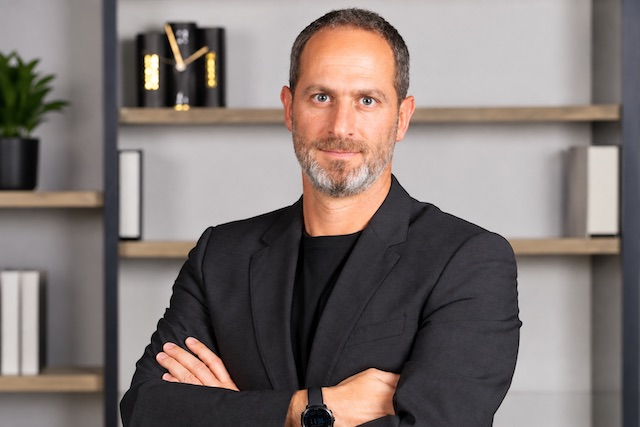

In an op-ed, Jad Shamseddin, COO of Aleph Hospitality, the largest independent hotel management company in the Middle East and Africa, examines the shifting and increasingly demanding requirements shaping hotel development. Against a backdrop of rising construction costs, inflation, labour shortages and geopolitical uncertainty, he identifies the criteria that now determine an asset’s long-term resilience.
A resilient sector facing a more demanding environment
Hospitality remains, in Jad Shamseddin’s view, one of the most resilient real estate sectors in the world. But the hallmarks of successful development have changed: investors are placing growing emphasis on operational resilience and an asset’s ability to protect returns regardless of market conditions.

Across the Middle East and Africa, owners are becoming more demanding in how they assess opportunities. Location, brand affiliation and design are no longer enough on their own — what matters now is the asset’s long-term financial viability.
According to JLL’s 2025 Global Hotel Investment Outlook, also cited previously in LTH, investors are increasingly favouring assets capable of sustaining profitability despite soaring costs and slowing RevPAR growth.
A new investment reality
Flexibility is, for Jad Shamseddin, one of the most significant shifts in hotel development today. Hotels can no longer rely on a single source of demand: the boundaries between business travel, leisure, extended stays, branded residences and lifestyle hospitality continue to blur.
This shift is transforming how spaces are designed. Lobbies, once formal and oversized, are giving way to more flexible, revenue-generating commercial spaces. Meeting spaces must be able to convert into event venues or co-working areas depending on demand, while food and beverage offerings need to appeal to both local residents and hotel guests.
The most resilient hotels, he argues, are those diversifying their revenue streams rather than relying almost exclusively on rooms. This is especially true in emerging and complex markets, where over-reliance on a single guest segment leaves operations vulnerable in times of disruption.
Designing for operational efficiency
Controlling construction costs stands out as another key challenge. In several international markets, converting or renovating existing buildings is becoming more attractive than new-build construction, as it shortens timelines, limits capital exposure and speeds up market entry.
For Jad Shamseddin, anticipating future needs is no longer limited to the guest experience — it applies equally to operational efficiency. Well-designed back-of-house spaces, optimised room sizing and simplified engineering systems all have a direct bearing on long-term profitability.
Too many projects, in his view, still prioritise visual impact and design over staffing, maintenance and energy costs. A visually striking hotel that is poorly conceived operationally can quickly become a financial burden for its owner, particularly as rising labour costs put growing pressure on overly complex service models.

Sustainability and profitability: two linked challenges
Sustainability performance is now shaping financing terms, brand approval processes and long-term asset valuations. Institutional investors, lenders and international brands are placing growing importance on ESG (Environmental, Social and Governance) integration, as energy costs continue to rise across many regions.
Efficient air-conditioning systems, water-saving technologies, smart building management and solar integration all have, according to the op-ed, a measurable impact on asset performance. In fact, in several African markets, energy efficiency has moved beyond an environmental goal to become an operational necessity.
Technology in the service of operations
Technology investment is becoming increasingly important to hotels’ operational performance. The most efficient properties are those using it to streamline operations and improve decision-making, without unnecessary complexity.
Owners now expect greater visibility into forecasting accuracy, workforce productivity, energy consumption and commercial performance. But for Jad Shamseddin, hospitality remains a fundamentally people-driven business, particularly in the Middle East and Africa, where personalised service remains a key driver of guest loyalty.
A shifting geography of growth
Location strategy is also evolving. While international cities and established luxury destinations retain their importance, opportunities are now emerging in secondary cities, mixed-use developments, airport corridors and underserved domestic markets.
These markets offer lower development costs, less competition and sustained growth in domestic demand. In Africa in particular, future momentum may come less from ultra-luxury projects than from disciplined midscale and upper-midscale developments built on efficient operating models. It is with this in mind that Aleph Hospitality is now targeting 100 hotels in operation by the end of 2029, betting on disciplined territorial development rather than upscale positioning alone.
Planning for longevity from the outset
For Jad Shamseddin, the most important lesson remains that planning must begin well before opening. The operator, the brand, technical teams and commercial strategy must be aligned from the earliest stages of development, or risk locking in “inefficiencies” and dysfunction for the asset’s entire lifespan.
The strongest developments, in his view, are not the most spectacular but the most disciplined and well-managed: they are built on realistic demand assumptions, prioritise operational efficiency, and retain enough flexibility to adapt to market shifts. This question of investment discipline runs through the wider sector, as noted in a Catella Hospitality Europe op-ed on the future of hotel investment.
For the next development cycle, the best-performing hotel assets, according to Jad Shamseddin, will be those built around flexibility, execution discipline and sustainable operational performance — rather than short-term cyclical optimism.
At a glance by The Hospitality Tribune
Aleph Hospitality’s COO on building resilient hotel assets in the Middle East and Africa
Author: Jad Shamseddin, COO, Aleph Hospitality
Key theme: operational resilience now outweighs location and brand affiliation as the top investment criterion
Source cited: JLL’s 2025 Global Hotel Investment Outlook
Regional focus: flexible, multi-revenue assets and disciplined midscale development across MEA
Strategic link: Aleph Hospitality targets 100 hotels by end of 2029