


A first safari camp for the brand’s 25th anniversary
The result of three years’ work, Anantara Tented Camp Kafue River is the first safari property in Africa for Minor Hotels‘ luxury brand. Its launch coincides with Anantara’s 25th anniversary, celebrated with a focus on slow travel and wellbeing.
(*) Good to know: Rewilding refers to a process that aims to give natural dynamics more room by reducing certain human interventions and, potentially, encouraging the return of animal or plant species. Three notions should, however, be distinguished: 1. Rewilding: restoring self-sustaining ecological processes, with human intervention reduced over time. 2. Renaturalisation: restoring a degraded or artificialised natural environment. 3. Reintroduction: the organised return of a species to an area from which it had disappeared.

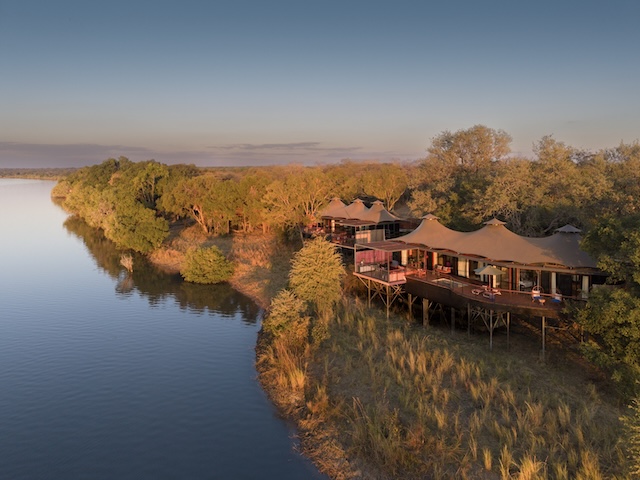
The camp has 13 keys set on the banks of the Kafue River, within the country’s largest national park. Following the property’s opening, covered by LTH in July, Anantara is now detailing its lead-in rate, the size of its accommodation and how its offer ties in with the park’s conservation programme.
Kafue National Park, an asset being rebuilt
Kafue National Park covers 22,480 km² and ranks among the least explored wilderness areas on the continent. Since 2022, the partnership between African Parks and the Zambian government has strengthened security, rebuilt infrastructure and improved fire management to enable wildlife to return.
This work has produced two milestones. The Kafue lechwe, an endemic antelope, was reintroduced in 2024. This was followed in 2025 by the largest wildlife translocation in the country’s history, which brought wildebeest and zebra back to grasslands that had long been deserted.
For the operator, this restoration momentum is an integral part of the experience on offer. Zambian guides lead two game drives a day in the park, complemented by boat safaris, bush picnics and catch-and-release fishing, away from the crowds of more established safari destinations.
THT Analysis – By anchoring its product in a conservation programme run by a recognised third party, Anantara links the value of its asset to the ecological trajectory of a territory under reconstruction. The quality of wildlife viewing, the main driver of demand in this segment, therefore depends directly on the success of the rewilding effort.
An offer built on elevation and wellbeing
Designed by Meg Ralph Spaces and recognised at the LIV Hospitality Design Awards, the camp runs on solar power, with on-site water purification and minimal use of single-use plastics. The structures, raised 3.5 metres above the ground on rosewood platforms, preserve the corridors used by wildlife. According to Anantara, no other lodge in Zambia is elevated in this way.
The accommodation comprises three types. The three 110 m² Horizon Terrace Suites, set 14.3 metres up and served by a glass lift, are presented as the highest rooms in the country. They are joined by nine 115 m² Pool and Bush Villas with heated pools, and a 400 m² Presidential Villa with private boat access.
Wellbeing is placed on a par with the safari. Each suite and villa has its own treatment room, where Anantara Spa treatments are delivered. A floating Technogym fitness platform, anchored on the river, completes the set-up.
Dining, included in the stay, draws on the brand’s Designer Dining concept. It is built around a floating four-cover pontoon reached by boat, the Luzuba Harvestry and the Twalumba Bar & Lounge.
A lead-in rate in line with the top end of the safari market
The lead-in rate is USD 6,300, or around €5,400, per room per night based on two guests. It includes full board, premium drinks, two daily game drives, butler service and one 90-minute treatment per person per stay. Opening offers are available for a limited period.
The model is built on an unscheduled approach, with each villa assigned a dedicated host to arrange meals, activities and treatments. Set against a capacity of 13 keys, this level of service reflects a strategy focused on very high contribution per room rather than volume.
The Green Season to smooth out seasonality
Anantara is promoting the green season, from December to March, as a stay period in its own right. Vegetation is at its peak, migratory birds arrive and wildlife gathers around water sources. The period is also characterised by cooler temperatures and fewer visitors.
The camp is reached by private charter flights from Livingstone or Lusaka to the Chunga airstrip. Lusaka International Airport is a four-hour drive away, with private transfers available.
The camp adds to Anantara’s presence in Southern Africa, where the brand has recently expanded its safari offer at Victoria Falls and appointed new leadership at Anantara Bazaruto Island Resort in Mozambique. It currently operates more than 50 hotels and resorts across Asia, Europe, Africa, the Middle East and the Indian Ocean.
At a glance by The Hospitality Tribune
Anantara Kafue River: luxury safari anchored in conservation
Anantara’s first safari property in Africa, launched in the brand’s 25th anniversary year
13 keys in Kafue National Park (22,480 km²), Zambia’s largest national park
Lead-in rate from USD 6,300 per room per night, full board, game drives and spa treatment included
Positioned alongside African Parks’ rewilding programme with the Zambian government since 2022
Green Season (December-March) promoted to extend demand beyond peak months