


European Commission opens formal proceedings
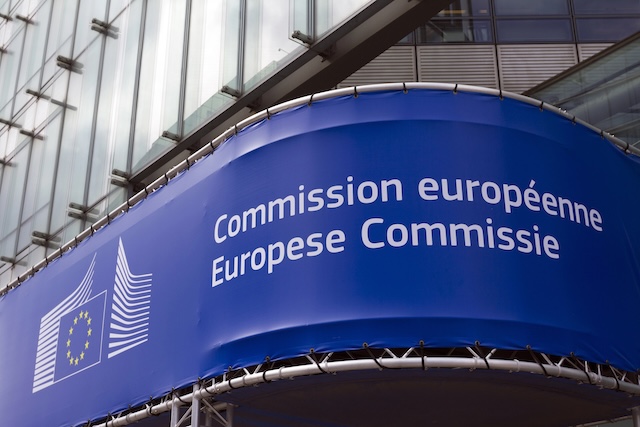
On 21 October 2026, the European Commission announced the opening of formal proceedings against Booking.com, one of the world’s leading accommodation booking platforms.
The investigation falls under the Digital Services Act (DSA), an EU regulation that imposes obligations on major digital platforms, particularly concerning risk management and transparency.
The Commission intends to determine whether Booking.com has adequately identified, assessed and mitigated several risks associated with the operation of its platform.

The proceedings focus on three areas:
- Fraudulent or non-compliant accommodation listings displayed on the platform.
- Phishing scams exploiting booking-related information.
- Listings receiving preferential visibility in exchange for payment, potentially without sufficiently clear advertising identification.
The Commission emphasises that the opening of proceedings does not prejudge their outcome.
At this stage, no infringement has been definitively established.
Higher commissions: Brussels examines paid hotel visibility
This is arguably the aspect of the investigation most directly connected to commercial relationships between Booking.com and hotel properties.

In its official announcement, the European Commission confirms that accommodation providers can improve the visibility of their listings in search results by agreeing to pay higher commissions.
The regulator wants to determine whether these promoted results are sufficiently identified as advertising.
The issue extends beyond the visual presentation of listings.
For travellers, a property’s position in search results may be interpreted as reflecting its relevance to their search criteria: location, price, availability, quality or guest reviews.
However, when additional remuneration contributes to a higher ranking, the presentation of results also has a commercial dimension.
The DSA requires users to be able to identify advertisements, understand on whose behalf they are displayed and know the main reasons why they are being shown.
The investigation therefore does not concern a general prohibition on higher commissions, but rather the transparency of the advertising prominence those commissions may provide.
An economic issue for hotel operators
For hoteliers, the proceedings highlight the true cost of visibility on booking platforms.
Beyond the contractual distribution commission, certain commercial programmes allow properties to increase their exposure in exchange for additional remuneration.
These mechanisms can help generate more bookings, but their economic value must be assessed against customer acquisition costs and the margin retained by the hotel.
The issue is particularly sensitive for independent properties, whose ability to develop direct booking channels may be more limited than that of major hotel groups with their own distribution and loyalty platforms.
Changes to transparency requirements could lead Booking.com to modify the presentation of certain search results.
However, they would not necessarily result in the disappearance of paid visibility programmes.
Fake listings: Commission examines verification and control measures
The second major area of scrutiny concerns accommodation advertised on the platform.
The Commission wants to establish whether Booking.com adequately assesses and limits the risks associated with fraudulent listings.
The situations under examination include non-existent properties, identity impersonation and non-compliant accommodation offers.
Brussels will also examine the mechanisms used to detect and remove such listings.
These practices can harm travellers, but also legitimate accommodation providers whose identities or commercial information may be used fraudulently.
For the hotel industry, trust in booking platforms is an essential element of digital distribution.
Phishing and fraudulent payments: Booking data at the centre of the investigation
The Commission will also examine risks associated with phishing attempts.
Some scams exploit information relating to a reservation to send travellers deceptive payment requests.
The apparent credibility of these messages can make the fraud particularly difficult to detect.
The investigation will focus in particular on:
- How booking data is shared between Booking.com and accommodation providers.
- The design and operation of the platform’s messaging system.
- Measures intended to prevent the fraudulent use of booking information.
- Safeguards against illegitimate payment requests.
The Commission is seeking to establish whether the risks have been properly assessed and whether preventive measures are sufficient.
The opening of proceedings does not, in itself, establish the existence of any specific technical security vulnerability.
DSA Articles 26, 34 and 35: The legal framework for the investigation
The European Commission has identified several provisions that may be relevant to the proceedings.
Articles 34 and 35 of the DSA require very large online platforms to identify, assess and mitigate systemic risks associated with their services.
Article 26(1) addresses, in particular, advertising transparency obligations.
These provisions form the legal basis for the investigation into fraudulent listings, scams and preferential rankings obtained through payment.
The proceedings follow a preliminary investigation that included an analysis of risk assessment reports submitted by Booking.com between 2023 and 2026, its transparency reports and its responses to two formal requests for information.
Those requests were issued on 23 September 2025 and 26 May 2026.
The Commission is also cooperating with the competent Dutch authority, as Booking.com is established in the Netherlands.
What are the potential consequences for Booking.com?
The proceedings are now entering a phase of in-depth investigation.
The Commission may request additional information, conduct interviews or carry out inspections.
It may also adopt interim measures, establish infringements where warranted or accept corrective commitments proposed by the company.
If an infringement of the DSA is established at the conclusion of the proceedings, the regulatory framework provides for financial penalties of up to 6% of the provider’s annual worldwide turnover.
This percentage represents the statutory maximum, not a penalty announced in this case.
According to Reuters, Booking.com has stated that it is cooperating with European authorities and maintains that user safety, trust and the protection of personal data are among its priorities.
No definitive timetable for the conclusion of the investigation has been announced.
LTH Analysis | Commissions are also becoming an issue of competitive transparency
The investigation into paid rankings is particularly significant for hotel distribution.
It highlights the dual role of booking platforms: commercial intermediaries remunerated through reservations and gatekeepers controlling the visibility of accommodation providers.
For hotels, agreeing to a higher commission may be a customer acquisition decision. For consumers, however, that commercial payment should be distinguishable from the relevance criteria used to rank search results.
The European investigation could therefore help clarify the boundary between commercially influenced rankings and advertising.
It also raises an economic question for operators: what is the actual return on additional visibility when its cost reduces the margin earned on each booking?
The issue extends beyond Booking.com: it concerns the clarity and transparency of the digital distribution model across the hospitality industry.
At a Glance
Company: Booking.com, part of Booking Holdings.
Authority: European Commission.
Proceedings opened: 21 October 2026.
Regulatory framework: Digital Services Act (DSA).
Investigation area 1: Fraudulent and non-compliant accommodation listings.
Investigation area 2: Phishing scams involving reservation and guest data.
Investigation area 3: Paid-for boosted listings potentially lacking clear advertising labels.
Relevant DSA provisions: Articles 26(1), 34 and 35.
Previous information requests: 23 September 2025 and 26 May 2026.
Potential maximum fine: Up to 6% of annual worldwide turnover if infringements are established.
Current status: Formal investigation; no final infringement decision.
LTH perspective: The proceedings raise fundamental questions about commission-based visibility, customer acquisition costs and transparency in hotel distribution.