


Britannia Hotels: A profitable business model despite a damaged reputation
For years, Britannia Hotels has embodied a paradox in British hospitality: a hotel group capable of maintaining profitability despite exceptionally low levels of guest satisfaction.
The company, which operates 64 hotels and more than 10,000 rooms, has ranked last for twelve consecutive years in major hotel-chain satisfaction surveys conducted by the British consumer organisation Which?.
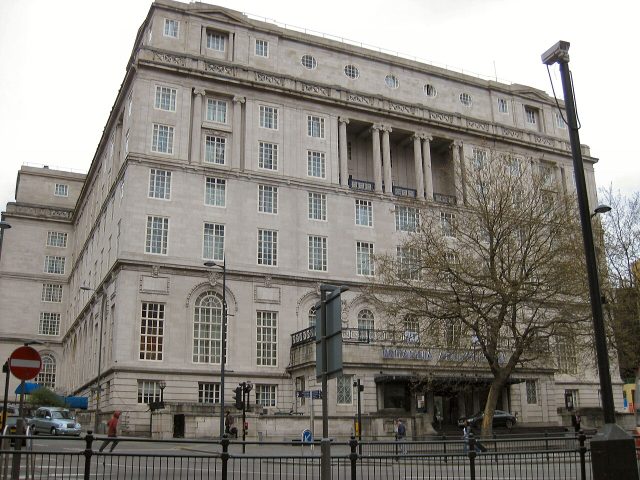
The Adelphi Hotel in Liverpool, one of the portfolio’s landmark properties, illustrates this situation.

Opened in 1914, this historic hotel, once regarded as one of the country’s leading addresses, retains a remarkable architectural heritage. However, its ageing facilities and the closure of certain amenities highlight the modernisation challenges facing Britannia.
Nevertheless, the group’s damaged commercial reputation has not prevented it from reporting profits over many years.
That equation may now become increasingly difficult to sustain.
New leadership and a renovation programme
At the age of 88, Alex Langsam, the founder of Britannia Hotels, has stepped back from the group’s day-to-day management.
A four-person leadership team now intends to introduce both immediate and phased improvements across the properties.
The stated priorities are twofold: modernising the hotel product and restoring the group’s reputation.
This is more than a cosmetic exercise.
Renovating a portfolio of this scale requires decisions concerning capital expenditure, commercial positioning and the future profitability of each asset.
The latest available financial results also indicate increasing pressure on performance.
For the financial year ended March 2025, Britannia Hotels reported revenue of £160.7 million, down 1%, and pre-tax profit of £27.2 million, a decline of 13%.
The group remains profitable, but its new strategy will require greater resources to be allocated to improving its properties.
The overall amount of planned investment has not been disclosed.
The reduction in government contracts changes the rules of the game
Britannia’s repositioning comes against a backdrop of a gradual reduction in the use of hotels to accommodate asylum seekers in the United Kingdom.
The British government has introduced a policy aimed at reducing reliance on this form of temporary accommodation in favour of alternative arrangements.
In August 2026, the Home Office, the UK’s interior ministry, notably announced that thirteen properties would be withdrawn from the scheme.
These included two Britannia hotels: the Britannia Ashley Hotel in Hale and the Grand Metropole Hotel in Blackpool.
This development fundamentally changes the commercial outlook for the properties concerned.
A hotel operating under an institutional accommodation contract benefits from greater visibility over occupancy, potentially reducing its exposure to fluctuations in leisure and business travel demand.
Conversely, returning to the commercial market requires the rebuilding of a competitive value proposition: suitable guestrooms, functioning facilities, pricing strategy, distribution and online reputation.
However, the reduction in these public contracts must be distinguished from the group’s overall financial position: the precise contribution of this activity to Britannia’s revenue is not publicly detailed in the available information.

France | Widiane Mendes had already raised the question in LTH
These developments in the United Kingdom directly echo a debate already under way in France.
On 7 September 2026, in an exclusive opinion article published in La Tribune de l’Hôtellerie, entitled “Budget Hospitality Has Not Had Its Last Word”, Widiane Mendes, Managing Director of Byron Gestion, examined the consequences of the gradual decline in emergency accommodation agreements for France’s budget hotel sector.
Her analysis centred on one key observation: for years, contracts with the state or charitable organisations enabled certain hotels to maintain regular occupancy, regardless of their attractiveness in the traditional hospitality market.
The gradual withdrawal of these arrangements is now forcing operators to reassess their business models.
Widiane Mendes did not conclude that budget hospitality was facing extinction. On the contrary, she emphasised that demand still exists for affordable accommodation, provided the product meets contemporary guest expectations.
Cleanliness, bedding quality, functioning facilities, ease of booking and online reputation are all important levers for winning back customers.
The Britannia case now provides a British counterpart to this analysis: the loss of relatively secure institutional occupancy can expose renovation and repositioning requirements that have been deferred for years.
From contracted revenue to winning back guests
Comparing the French and British markets does not imply that their public accommodation arrangements are identical.
Contractual mechanisms, accommodation conditions and government policies differ.
However, their economic consequences for the hotel assets concerned share certain similarities.
In both countries, a reduction in institutionally funded room nights can reveal a gap between a property’s historical profitability and its actual ability to attract individual guests.
A hotel may have generated satisfactory financial results through contracted occupancy while gradually losing its commercial competitiveness.
Returning to the open market then requires investments that can no longer be postponed.
The operator must win back customers; the owner must assess the economic justification for the necessary improvements.
This is precisely the change in perspective advocated by Widiane Mendes in her contribution to LTH.
LTH Analysis | The real risk: Confusing revenue visibility with sustainable asset value
The Britannia Hotels case illustrates the limitations of a business model in which occupancy security can delay investment decisions.
An institutional contract provides revenue visibility. It guarantees neither the quality of the hotel product nor its future competitiveness.
When this source of demand contracts, owners and operators must reassess the fundamentals of each property: location, physical condition, required capital expenditure, commercial revenue potential and post-renovation profitability.
The issue therefore extends beyond the termination of public contracts: it concerns a hotel asset’s ability to create value without remaining dependent on a captive source of demand.
The questions raised by Widiane Mendes regarding France’s budget hospitality sector find a particularly revealing practical example here.
For Britannia, the challenge will be to demonstrate that its portfolio can regain sufficient commercial appeal to justify the announced investments.
At a Glance
Company: Britannia Hotels.
Country: United Kingdom.
Portfolio: 64 hotels and more than 10,000 rooms.
Founder: Alex Langsam, 88.
Governance: Four-person management board following the founder’s operational step-back.
Strategy: Phased renovation and improvement programme.
Customer satisfaction: Last in 12 consecutive Which? hotel-chain surveys.
FY2025 revenue: £160.7 million.
FY2025 pre-tax profit: £27.2 million.
Government accommodation: UK authorities are progressively reducing their reliance on hotels for asylum accommodation.
Affected properties: Britannia Ashley Hotel and Grand Metropole Hotel were included in the August 2026 government announcement.
French perspective: Widiane Mendes explored the comparable challenges facing France’s budget hotel sector in an exclusive September 2026 article for LTH.
Investment challenge: Reassessing renovation requirements and commercial potential as institutional demand recedes.
LTH perspective: Contracted occupancy may support profitability, but long-term asset value ultimately depends on product quality and market competitiveness.