
Customer experience has become a strategic driver of value in sectors as diverse as hospitality, luxury and wellness. It is against this backdrop that Glion Institute of Higher Education, a Swiss institution founded in 1962 and part of the Sommet Education network, is rethinking its Master’s portfolio. From 2027, its programmes will feature new specialisations, a greater role for artificial intelligence and more direct exposure to the real-world challenges facing businesses.
Hospitality skills that have become transferable
The redesign draws on more than sixty years of expertise in developing skills specific to hospitality: a detailed understanding of the customer, anticipating needs, designing experiences and managing multicultural teams. Long confined to the hotel industry, this know-how is now proving transferable across the entire services sector.
Alumni career paths bear this out. Five years after graduating, nearly half of Glion graduates work outside the traditional hospitality sectors – a figure that directly informs the direction taken by the new programmes.
Three restructured Master’s programmes
The institute’s three full-time Master’s programmes have been redesigned: International Hospitality Business, Luxury Experience & Brand Management, and Real Estate, Finance and Hotel Development. The new structure comprises two academic semesters, followed by six months of professional practice in the form of an internship or an applied research project with a company.
The Master in International Hospitality Business undergoes the most significant transformation. After a shared first semester devoted to business and leadership, students will choose from three new specialisations: “Guest Experience & Service Design”, “Entrepreneurship & Innovation” and “Wellness & Longevity”. The latter reflects the broadening scope of hospitality, training managers able to apply service excellence and personalisation to emerging wellness and longevity concepts.
The Master in Luxury Experience & Brand Management, meanwhile, will focus on luxury business models, AI, responsible luxury and creative direction. The Master in Real Estate, Finance and Hotel Development strengthens its investment dimension, covering asset management, private equity and sustainable real estate, with the option of earning recognised professional certifications (STR, Bloomberg).
Joseph Karam, Dean of Graduate Studies at Glion Institute of Higher Education, explains that the future belongs to graduates who can combine strategic thinking with a capacity for constant adaptation, and that this new generation of Master’s programmes was designed precisely for that reason. Beyond subject expertise, he adds, students learn to operate in complex environments, work with emerging technologies, lead diverse teams and solve concrete problems alongside industry partners.
AI as a cross-cutting management skill
Artificial intelligence is no longer treated as a standalone subject but as a management skill in its own right. Courses such as “Digital, Data & AI for Decision-Makers” aim to equip students with analytical and decision-support tools, while developing their ability to recognise situations where human expertise remains decisive.
Teaching is also becoming more interactive, with greater emphasis on case studies and in-class problem-solving. The faculty, drawn from the professional world, includes Dr JinJu Heo, a former innovation adviser to Chanel, and Dr Evrim de Groot, a specialist in changing consumer behaviour in luxury.
Deeper immersion in industry
All programmes are strengthening professional immersion through study trips, talks by senior executives and applied projects. Students tackle real operational challenges, developing strategic recommendations that they present directly to partner companies.
For Philippe Vignon, Managing Director of Glion since June 2025, this shift goes beyond a single sector. He stresses that hospitality is no longer simply an industry but has become an approach to leadership that increasingly shapes luxury, travel, wellness and, more broadly, the experience economy. In his view, the institution’s role is not only to respond to change but to anticipate it: by evolving its Master’s portfolio, Glion is building on more than 60 years of academic excellence to train graduates who combine strategic vision, technological fluency and human skills.
A strengthened academic position
Glion ranks third in the world for Hospitality & Leisure Management in the QS World University Rankings by Subject 2026, and third worldwide for employer reputation. The institute was sixth in the same ranking last year, as LTH reported at the time of the 2025 QS rankings.
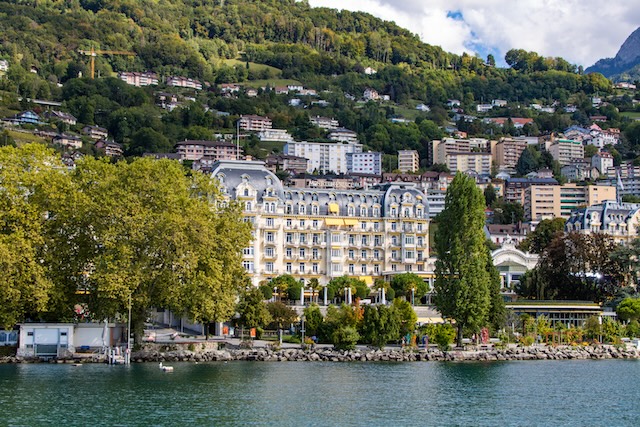
Recognised by the Swiss Accreditation Council as a University of Applied Sciences – an accreditation obtained in 2025 – Glion is also accredited by the New England Commission of Higher Education (NECHE). The institution offers bachelor’s, master’s and executive programmes in hospitality, luxury and finance across three campuses in Montreux, Bulle and London.
At a glance by The Hospitality Tribune
Glion overhauls its Master’s portfolio for 2027
Three full-time Master’s programmes redesigned: two academic semesters plus six months of professional placement
New specialisations: Guest Experience & Service Design, Entrepreneurship & Innovation, Wellness & Longevity
AI embedded as a cross-cutting management skill across all programmes
Real Estate, Finance and Hotel Development adds asset management, private equity and STR/Bloomberg certifications
Nearly half of alumni work outside traditional hospitality five years after graduating