United States | Hilton launches Home2 Suites Clean Energy Prototype to cut owners’ energy costs
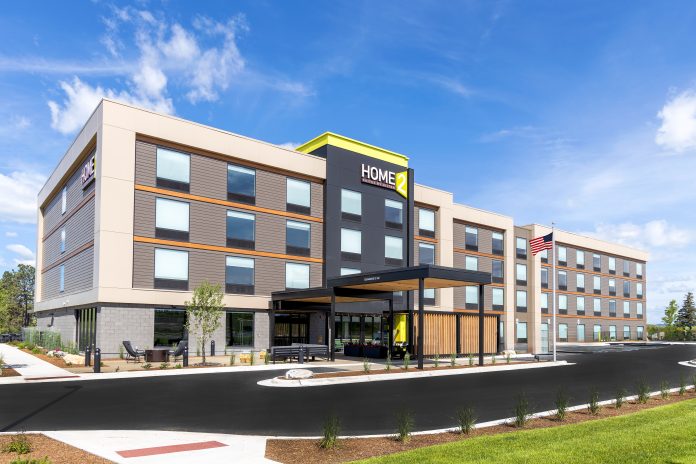
Hilton (NYSE: HLT) is now offering US hotel owners and developers the Home2 Suites by Hilton Clean Energy Prototype. The optional, turnkey model combines all-electric systems, renewable energy and an enhanced building envelope. It is the group's first prototype designed for zero operational emissions to be made widely available. It arrives as utility costs for US hotels have risen by 28% over five years.
Announced in New York, the Home2 Suites by Hilton Clean Energy Prototype is aimed at hotel owners and developers in the United States. The concept is optional and can be deployed at scale. It combines all-electric systems, on-site and off-site renewable energy generation and high-efficiency building technologies. The objective is threefold: to lower operating costs, reduce carbon emissions and build more resilient hotel assets.
According to the American Hotel & Lodging Association, utility costs for US hotels have risen by 28% over the past five years. Hilton is positioning the prototype as a response to shifting energy markets. It also answers the industry’s demand for pragmatic sustainability solutions that can be deployed at scale.
Inline article ad ☟
It is the group’s first prototype designed for zero operational emissions to be made widely available to owners and developers. Hilton describes it as its most sustainable prototype offering to date. The prototype meets the World Green Building Council’s requirements for zero operational emissions buildings and forms part of the group’s Travel with Purpose strategy.
Up to 40% modelled energy savings
Hilton carried out energy modelling across 13 US cities. Compared with a traditional Home2 Suites prototype, the new model would improve energy efficiency by around 30% and cut annual energy costs by 18% to 40%. Operational carbon emissions would fall by 440 tonnes, and the group also points to a positive effect on asset value.
Hilton notes that these results depend on market conditions. The comparison is made against a traditional Home2 Suites model powered by conventional energy sources, either natural gas or non-renewable grid electricity. The group highlights a stronger return on investment over the full life of the asset.
Jean Garris Hand @ credit LinkedIn
Jean Garris Hand, Vice President and Global Head, Sustainability & Responsible Business at Hilton, said that Hilton knows sustainability solutions have the greatest impact when they are scalable, pragmatic and make economic sense, helping to shape the future of responsible travel.
Jean Garris Hand added that the group’s owners, many of whom run small businesses, are facing rising energy costs and are looking for a turnkey option to reduce operating expenses, improve energy efficiency and lower emissions. With the Home2 Suites Clean Energy Prototype, she said, Hilton aims to show that sustainable innovation can also drive long-term economic value.
Home2 Suites, a testing ground for the extended-stay segment
The choice of Home2 Suites reflects the brand’s profile. It was designed around the needs of extended-stay travellers and an efficient approach to hotel design. According to Hilton, its flexible prototype makes it an ideal platform for testing and rolling out performance solutions across the entire hotel life cycle, from construction to building systems in operation.
Inline article ad 1 ☟
The brand already incorporates several features to reduce energy and water consumption and streamline operations. These include energy-efficient building and roofing materials, water-saving landscaping and ENERGY STAR-certified equipment, along with saltwater pools, reusable tableware and LED lighting.
Home2 Suites is also the hotel brand with the largest development pipeline in the United States. This momentum was on display at the Hilton Americas Development Awards 2025, where the Home2 Suites/Tru by Hilton project in Flagstaff was named Dual-Brand Deal of the Year. The brand is also among the extended-stay growth drivers highlighted in Hilton’s 2026 openings. On the demand side, more than half of its guests consider preserving resources for future generations to be important.
Talene Staab @ credit linkedIn
Talene Staab, Brand Leader of Home2 Suites by Hilton, said that since its launch the brand has been built on innovation, efficient solutions and flexible design, and that this spirit of innovation remains at its core today, shaping everything from the flexible prototype and operational efficiencies to the amenities and experiences designed for extended-stay travellers. She described the optional prototype as the natural continuation of that commitment.
Talene Staab added that, as the brand continues to grow across the country, Home2 Suites gives Hilton a strong platform for a forward-looking solution that can help owners reduce energy consumption and operating costs at scale, while continuing to deliver the reliable extended-stay experience that guests know and appreciate.
Energy procurement, a second lever for owners
Beyond the prototype, Hilton says it is exploring other ways to apply these solutions according to markets, operating environments and owners’ needs. Hilton Supply Management, the group’s procurement arm, continues to strengthen its energy procurement programme. The programme helps hotels control costs and forecast budgets more accurately, and allows them to assess renewable or low-carbon energy options where available.
In 2025, the programme enabled participating owners to save around 17% on their energy costs and avoid more than 102,130 tonnes of CO₂. It draws on renewable energy sourcing, procurement expertise and cost-control tools, and covers Hilton’s entire global network of more than 9,400 hotels in operation.
Our analysis • A decision left to owners
Hilton is presenting sustainability as a way to control operating costs rather than as an image-building exercise. In doing so, it speaks directly to owners it describes as exposed to rising energy costs. The prototype remains optional, so the decision to invest rests with each owner. The group has not disclosed the upfront capital premium compared with the traditional prototype, and it stresses that savings depend on market conditions. For owners and their lenders, the model’s appeal will therefore be assessed project by project, weighing construction costs against expected operating gains.
Hilton launches the Home2 Suites Clean Energy Prototype for U.S. owners
Concept: optional, turnkey all-electric prototype combining on-site and off-site renewables with an enhanced building envelope
Modelled savings: 18-40% lower annual energy costs and around 30% higher energy efficiency vs. a traditional Home2 Suites (13 U.S. cities)
Emissions: 440 metric tons of operational carbon avoided; aligned with World Green Building Council zero operational emissions requirements
Context: U.S. hotel utility costs up 28% over five years (AHLA)
Procurement: Hilton Supply Management program saved participating owners around 17% on energy costs in 2025