


A new phase for the programme
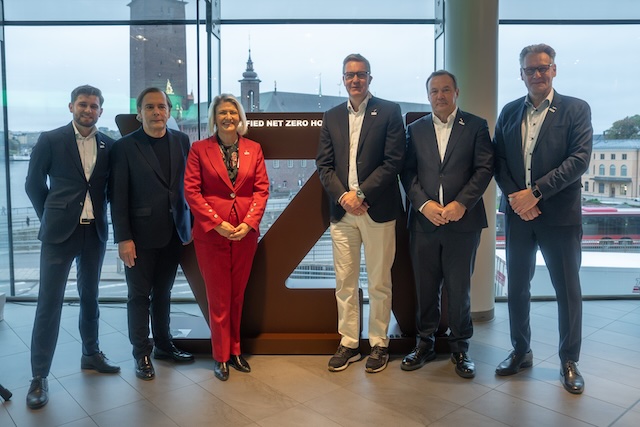
This launch marks a new milestone in Radisson Hotel Group’s ambition to roll out its Verified Net Zero programme across its global portfolio. The first pilots were inaugurated in Manchester and Oslo, followed by several further launches. The programme is intended to demonstrate that the principles of net zero hotel operations can be applied progressively to different properties, markets and operating contexts.
Three Radisson Blu hotels in Stockholm are joining the programme: the Radisson Blu Waterfront Hotel, Stockholm, together with the Stockholm Waterfront Congress Centre, the Radisson Blu Royal Viking Hotel, Stockholm and the Radisson Blu Arlandia Hotel, Stockholm-Arlanda. In Denmark, the Radisson Blu Scandinavia Hotel, Copenhagen has also achieved Verified Net Zero status.

The roll-out follows the recent launch of three Verified Net Zero hotels in Norway. It represents a significant step towards the target of 100 Verified Net Zero hotels by 2030.
Hotels anchored in the MICE segment
Recently renovated, the Radisson Blu Waterfront Hotel, Stockholm has 414 rooms and suites. It stands next to the Stockholm Waterfront Congress Centre and Central Station, close to City Hall. The hotel has run on 100% renewable energy since it opened in 2011.
The Stockholm Waterfront Congress Centre is one of Sweden’s largest and most flexible meeting and event venues. It offers 14,000 sq m of event space across 24 meeting rooms, and can accommodate everything from small meetings to major international congresses of up to 3,000 delegates.
When it opened, the congress centre was a pioneer of sustainable architecture and energy-efficient design. It remains one of the most energy-efficient buildings in Europe. Its features include 1,040 sq m of solar panels and a cooling system that draws water from the neighbouring Klara Sjö lake. The building is LEED Gold certified.
Also next to Central Station, the Radisson Blu Royal Viking Hotel, Stockholm opened in 1984 and has 459 rooms and suites. It offers 15 meeting rooms, the largest of which can hold 180 people. The hotel also features a recently renovated relaxation area with an indoor pool and jacuzzi, as well as HIGH Bar Stockholm, with panoramic views over the city.
The Radisson Blu Arlandia Hotel, Stockholm-Arlanda is located 2 km from the airport. It has 342 rooms and 24 meeting rooms, with a total capacity of 771 people. It brings together flexible event space, accommodation and direct access to Stockholm-Arlanda Airport on a single site.
In Copenhagen, the Radisson Blu Scandinavia Hotel, which opened in 1973, has 544 recently renovated rooms, two restaurants and two bars. With 14 meeting rooms and a capacity of more than 2,000 people, it ranks among the Danish capital’s leading meeting and event venues. Its spaces include The View, on the 25th floor, which can host up to 125 guests.
Net zero applied to existing stock
With these four properties, Radisson Hotel Group aims to show that large congress hotels and convention centres can move to verified net zero operations without sacrificing capacity or service levels. According to the group, net zero hospitality at scale is not limited to new builds or a handful of showcase projects.

The model can also be applied to existing hotels whose operations are already efficient. These hotels have complex infrastructure, accommodate large groups of guests and delegates, and run substantial conference activity.
Beyond its environmental impact, the programme reflects the group’s conviction that sustainability and profitability must go hand in hand. Reducing energy and resource consumption can make hotel operations more efficient and more resilient over the long term. It also meets the growing expectations of guests, owners and corporate clients. Lessons learned from these properties will be used to extend the programme across the rest of the portfolio, a commitment already set out in the group’s 2025 Responsible Business report.
Federico J. González, Global CEO of Radisson Hotel Group, stressed that growth and sustainability cannot be treated as two separate conversations. To build a stronger hotel business over the long term, he said, the group needs hotels that reduce their environmental impact while continuing to meet the expectations of guests, owners and teams. He added that what Radisson has learned through Verified Net Zero gives it the opportunity to push this ambition further, and that the expansion in Scandinavia marks another important step towards 100 Verified Net Zero hotels by 2030.
Independent verification by TÜV Rheinland
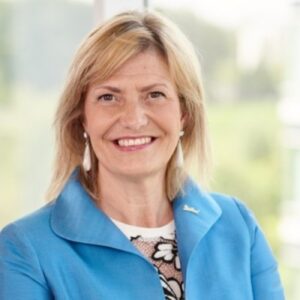
For Inge Huijbrechts, Chief Sustainability & Security Officer at Radisson Hotel Group, the programme has now reached a new scale. She said that, with four new launches in Stockholm and Copenhagen, Verified Net Zero continues to gain momentum, with the group now operating nine Verified Net Zero hotels across the Nordics and the UK. In her view, this proves that net zero hospitality is no longer a concept or a pilot, but a reality that can be deployed at scale.
She went on to explain that by extending the programme to some of the region’s leading meeting and event venues, the group is helping corporate clients, event organisers and guests to reduce the footprint of their travel and events, without compromising on quality, flexibility or capacity. Above all, she noted, every Verified Net Zero hotel is independently verified by TÜV Rheinland against the Net Zero Methodology for Hotels, giving clients confidence, transparency and credibility in an increasingly complex sustainability landscape.
From Scopes 1 and 2 to the supply chain
The Verified Net Zero programme covers the carbon footprint linked to energy consumption (Scopes 1 and 2 as defined by the Greenhouse Gas Protocol). It also covers the hotel’s operational and supply-chain footprint (Scope 3). Each property runs on 100% renewable energy, through electrification or the purchase of renewable energy for all uses: heating, cooling, hot water, kitchens, spa and pool.
For Scope 3, the programme involves redesigning operations to reduce waste and reviewing supply chains, with a priority on low-carbon menus. It also addresses other emission sources such as laundry and guest amenities. In Copenhagen, the Radisson Blu Scandinavia Hotel sources 100% renewable electricity, is installing demand-controlled LED lighting and sorts its waste into 15 separate streams.
On food and beverage, the group has partnered with Swedish specialist Klimato. Together, they analysed the entire culinary offer: room service, Meetings & Events menus and the breakfast buffet. Recipes were reworked to reduce their carbon footprint. Menus now carry carbon labels from A (lowest footprint) to E (highest). They favour fresh, seasonal produce and cut the carbon footprint of recipes by up to 40%.
Each hotel is independently verified by TÜV Rheinland, which checks its compliance with an internationally recognised Net Zero Methodology for Hotels. For event organisers and corporate buyers, the benefit is tangible. These hotels show that existing properties can offer net zero stays and meetings while retaining the flexibility and capacity required for major business events, a topic the group also addresses in its sustainability guide for association events.
At a glance by The Hospitality Tribune
Radisson scales Verified Net Zero to major Nordic M&E hotels
Four Radisson Blu hotels launched as Verified Net Zero: three in Stockholm, one in Copenhagen
Portfolio now totals nine Verified Net Zero hotels across the Nordics and the UK
Includes Stockholm Waterfront Congress Centre: 14,000 sq m, up to 3,000 delegates, LEED Gold
Scopes 1, 2 and 3 covered, independently verified by TÜV Rheinland
Target: 100 Verified Net Zero hotels by 2030