

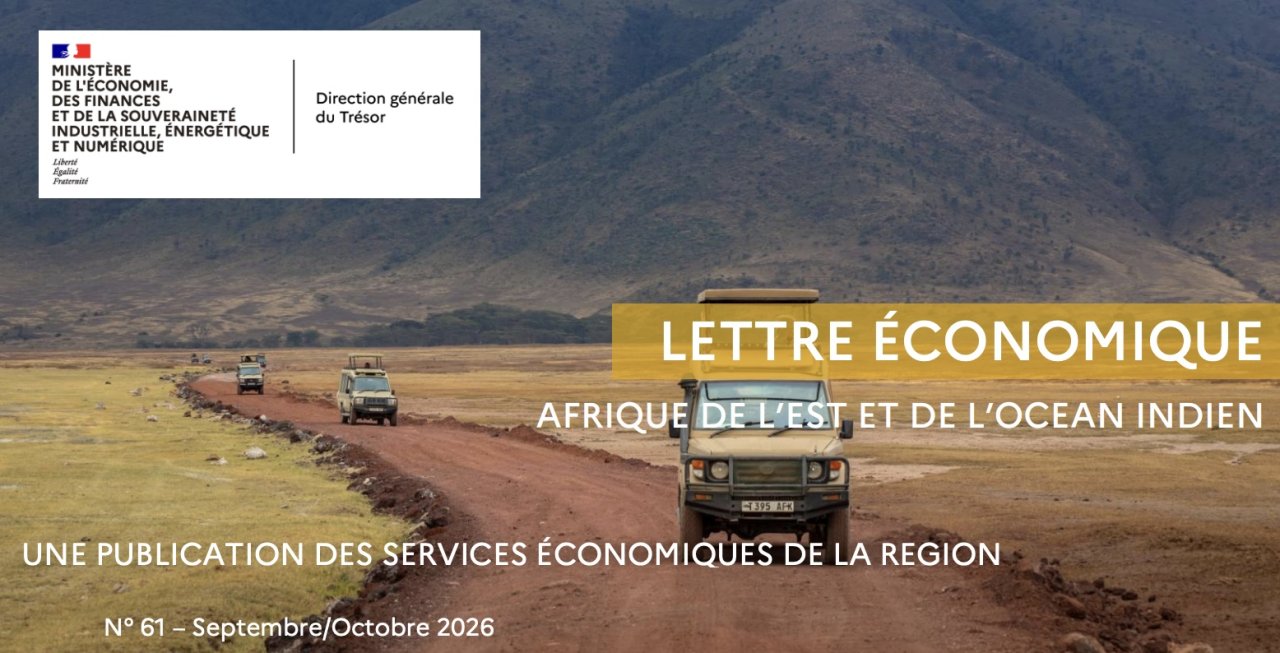


Tourism growth conceals significant disparities
East Africa and the Indian Ocean represent two complementary tourism regions, combining established beach destinations, safari circuits, business travel and emerging markets.
Their appeal rests on substantial natural and cultural resources, as well as improving air connectivity, increasingly diversified visitor profiles and the development of international hotel offerings.
For investors, however, this momentum does not translate into uniform opportunities.

Tourism’s contribution to national economies varies considerably, from approximately 21% of GDP in the Seychelles to a contribution that remains marginal in Djibouti. Between these two extremes, Tanzania, Madagascar, Kenya, Rwanda and Mauritius exhibit markedly different development models.
Growth in arrivals alone is therefore insufficient to assess a hotel market’s potential. Visitor spending, infrastructure quality, the depth of domestic demand and the availability of skilled personnel are equally decisive factors.
Ten destinations, ten economic realities
The French Treasury report highlights substantial differences in tourism’s economic contribution, visitor volumes and revenues generated.
| Destination | Tourism contribution to GDP | International arrivals |
|---|---|---|
| Seychelles | 21% | 398,841 |
| Tanzania | 17.2% | 2.29 million |
| Madagascar | 11% | 330,909 |
| Rwanda | 9.8% | 1.49 million |
| Kenya | 9.3% | 2.65 million |
| Mauritius | 9% | 1.44 million |
| Ethiopia | 8.5% | 1.6 million |
| Uganda | 5.9% | Approximately 1.7 million |
| Comoros | 5.5% | Approximately 85,900 |
| Djibouti | Marginal | 145,000 |
Sources: French Directorate General of the Treasury and national statistics reproduced in its report. Visitor data relate to 2025, except for Ethiopia (2025/2026 financial year), Comoros (2025 estimate) and Djibouti (2022). GDP contributions are not necessarily calculated using identical statistical definitions.

This comparison reveals three broad categories of markets.
Mature island destinations, particularly Mauritius and the Seychelles, already have well-established hotel sectors with a strong upscale positioning.
Expanding mainland markets, such as Kenya, Tanzania and Rwanda, are seeking to combine leisure tourism, regional demand and development of the meetings, incentives, conferences and exhibitions (MICE) segment.
Finally, destinations with significant but still underexploited potential, including Madagascar, Comoros, Ethiopia and Djibouti, must first address constraints relating to accessibility, infrastructure and financing.
Kenya, Tanzania and Rwanda: three approaches to value creation
Kenya: diversifying destinations and preparing for AFCON 2027
With 2.65 million international visitors in 2025, Kenya confirms its position as a major tourism market in East Africa.
Tourism receipts exceeded KES 500 billion, equivalent to approximately USD 3.8 billion, representing year-on-year growth of 10.6%.
The country also benefits from substantial domestic demand, accounting for 5.2 million visitors.
Its national strategy for 2025–2030 targets five million international arrivals and USD 9.3 billion in tourism receipts by 2030.
For the hotel industry, opportunities include Nairobi, coastal destinations and safari circuits, as well as secondary locations that could benefit from new transport investment.
The 2027 Africa Cup of Nations (AFCON), jointly hosted with Uganda and Tanzania, could accelerate investment in sports infrastructure, accommodation capacity and event tourism.
Nevertheless, the challenge will be to ensure sustainable demand beyond the tournament.
Tanzania: tourism receipts growing faster than arrivals
Tanzania recorded 2.29 million international arrivals in 2025, an increase of 7.1%, while tourism receipts rose by 13% to USD 4.4 billion.
This trend suggests an improvement in the economic value generated by visitor activity, although it does not, in itself, demonstrate an increase in hotel profitability.
The country benefits from two complementary tourism drivers: safaris in its major national parks and Zanzibar’s beach tourism offering.
The development of southern tourism circuits and the modernisation of airport infrastructure could gradually expand the geographical scope of investment opportunities.
The report also highlights a French presence in hospitality and tourism services, notably through two properties inaugurated in Zanzibar in September 2026, representing investments exceeding USD 50 million.
Rwanda: prioritising value over volume
Rwanda illustrates a different strategy.
With 1.49 million international arrivals in 2025, the country remains below its 2019 visitor levels. Nevertheless, tourism receipts reached USD 685 million.
Gorilla tourism alone generated USD 248 million, accounting for 36% of tourism receipts.
Business and event tourism represents a second pillar, generating USD 94.7 million in receipts in 2025.
Development of the future Bugesera International Airport, whose first phase is designed to accommodate seven million passengers annually, is expected to support this strategy.
For hotel investors, Rwanda therefore provides an example of a positioning strategy based on the value of each stay, differentiated experiences and high-spending international visitors.
However, this model remains exposed to the concentration of revenues in a limited number of activities, the destination’s high costs and constraints relating to workforce skills.
Mauritius and Seychelles: two island models under pressure
Mauritius: a mature hotel market facing accommodation diversification
Mauritius welcomed approximately 1.44 million tourists in 2025, an increase of 3.9%.
According to the Association des Hôteliers et Restaurateurs de l’Île Maurice, the country’s hotel inventory comprised 105 establishments with a combined 13,411 rooms in August 2025.
Four- and five-star hotels accounted for 85.2% of this capacity.
This upscale specialisation provides a competitive advantage, but also exposes operators to operating costs, workforce pressures and climate-related risks.
One indicator deserves particular attention: the proportion of visitors reporting that they stayed in hotels declined from 75.4% in 2024 to 67% in 2025.
This development reflects the diversification of accommodation choices, particularly towards holiday residences and stays with friends or relatives.
For owners and operators, it raises questions about how hotels should adapt their positioning in response to alternative accommodation, as well as their ability to protect margins in an increasingly fragmented competitive environment.
Seychelles: deliberately managed growth
In the Seychelles, tourism accounts for approximately 21% of GDP and 60.8% of foreign exchange earnings.
The archipelago welcomed 398,841 visitors in 2025, generating USD 1.2 billion in tourism receipts.
Unlike destinations primarily seeking to increase visitor volumes, the Seychelles is considering limiting arrivals to 500,000 visitors by 2030.
This approach aims to preserve natural resources and infrastructure while prioritising upscale segments.
The tourism accommodation sector comprised 846 licensed establishments and 8,408 rooms in 2025.
Hilton, Constance Hotels & Resorts and Four Seasons are among the international operators present.
For investors, this strategy could favour refurbishment, repositioning and improved performance of existing assets rather than growth based exclusively on developing additional capacity.
However, this remains a strategic outlook rather than a guarantee of investment returns.
Madagascar, Ethiopia, Comoros and Djibouti: potential still constrained by infrastructure
Madagascar: the gap between ambitions and accommodation capacity
Madagascar aims to attract one million tourists by 2028, compared with 330,909 in 2025.
The country has approximately 34,465 rooms, according to ministry figures reproduced in the report, although accommodation capacity remains unevenly distributed.
Major beach destinations, particularly Nosy Be, attract a proportion of investment, while Antananarivo primarily serves business travellers.
Several hotel groups and investors are present, including Radisson Hotel Group, Marriott and Malagasy operators such as ENAC and Luceo.
Development potential is substantial, but domestic transport difficulties, the condition of the road network, energy supply and political instability weigh on investment prospects.
The central question is therefore not simply how many additional rooms can be built, but whether they will be accessible and capable of operating to international standards.
Ethiopia: COP32 as a catalyst for hotel development
Ethiopia reports 1.6 million international visitors and USD 5 billion in tourism receipts for the 2025/2026 financial year, according to figures released by the authorities.
Addis Ababa is estimated to have approximately 25,000 rooms, while the hotel construction pipeline reportedly comprises 5,964 rooms across 34 properties, according to W Hospitality Group.
The hosting of COP32 in November 2027 represents an important deadline.
The government has set an ambition to increase the capital’s accommodation capacity to 80,000 rooms before the event, a particularly ambitious target compared with existing supply.
The report also mentions an USD 80 million loan granted by the International Finance Corporation to MIDROC Group to finance a new Marriott-branded hotel.
Beyond the event, the viability of new properties will depend on the consolidation of business tourism, improved security and growth in international demand.
Comoros: limited supply and vulnerable projects
With fewer than 900 rooms recorded in 2024, Comoros still has a relatively small hotel inventory.
The authorities are targeting 200,000 international arrivals by 2030, compared with 80,250 in 2024.
Hosting the Indian Ocean Island Games in August 2027 could contribute to infrastructure modernisation.
However, project delivery remains challenging. The report notably highlights the suspension, since early 2025, of construction work on the Galawa Hotel, a 115-room five-star project backed by EUR 56 million in financing.
This situation illustrates the execution risks facing certain tourism investments in emerging markets.
Djibouti: a market still requiring development
In Djibouti, tourism activity remains predominantly driven by business travel.
The latest available figure in the report records 145,000 international visitors in 2022.
The government has set an ambition of one million tourists under Vision Djibouti 2035.
However, inadequate infrastructure, high service costs, regulatory difficulties and skills shortages continue to constrain prospects.
For hotel investors, the market therefore requires a selective approach based on identifying established customer segments and securing reliable operating conditions.
Uganda: between upscale ecotourism and hotel development
Uganda represents an intermediate market, with growth driven by regional visitor flows and nature-based tourism.
The country generated USD 1.6 billion in international tourism receipts in 2025.
Its accommodation offering includes safari lodges, urban hotels in Kampala and properties located near national parks.
At the end of 2025, the country had more than 3,800 licensed accommodation establishments, but only 117 properties classified according to the categories presented in the report.
This discrepancy highlights the challenges surrounding standardisation, service quality and professionalisation.
AFCON 2027 could stimulate investment in urban hospitality and transport infrastructure.
The development of ecolodges and concessions in protected areas also represents a potential growth avenue, subject to rigorous environmental management.
Strategic Analysis | Five decisive criteria for hotel investors
The French Treasury’s study offers several important lessons for asset owners, developers, operators and investment funds.
1. Tourism growth does not guarantee hotel profitability. Rising arrivals may conceal low-spending visitors, significant seasonality or high operating costs. Visitor statistics must be assessed alongside hotels’ operational performance.
2. Air connectivity is a key driver of asset value. Dependence on Gulf aviation hubs, domestic travel costs and insufficient regional connections directly influence destinations’ commercial potential.
3. Upscale positioning must reflect actual demand. The high-end models developed in Rwanda, Mauritius and the Seychelles cannot simply be replicated in markets dominated by domestic, regional or business demand.
4. Major events create opportunities but also risks of oversupply. AFCON 2027, the Indian Ocean Island Games and COP32 can accelerate investment. However, their success from a hotel investment perspective must be assessed against sustainable demand after the events have ended.
5. Bankability depends on the entire tourism ecosystem. Beyond land availability and financing, investors must assess access to energy, water, transport, skills and the services required for hotel operations.
Opportunities for international hotel groups and French operators
The report highlights the presence of French companies across several segments of the tourism value chain: hospitality, air transport, infrastructure, engineering, ecotourism and training.
This presence takes various forms, including international brands, franchises, independent properties owned by French entrepreneurs and partnerships with local investors.
Market developments could create opportunities in hotel management, franchising, technical assistance, asset refurbishment and the development of concepts adapted to regional customer segments.
For investors, value creation will depend not only on the pace of new openings, but also on operators’ ability to improve the performance and resilience of existing properties.
Conclusion | From visitor growth to value creation
East Africa and the Indian Ocean do not constitute a single, homogeneous hotel market.
The Seychelles prioritises managing visitor volumes and maximising the value of stays. Mauritius is seeking to preserve its upscale competitiveness. Rwanda is developing a selective model combining nature-based tourism and events. Kenya and Tanzania are focusing on diversification and infrastructure, while Madagascar, Comoros, Ethiopia and Djibouti still need to overcome significant structural constraints.
The French Treasury study therefore confirms an essential shift in perspective for hotel investment professionals: a destination’s tourism potential is not sufficient evidence of a project’s economic viability.
The quality of demand, accessibility, operational capabilities and the strength of local partners will remain decisive in converting tourism ambitions into high-performing hotel assets.
At a Glance
- 10 markets analysed: East Africa and Indian Ocean destinations covered by the French Treasury’s September–October 2026 report.
- Tanzania: 2.29 million international arrivals and USD 4.4 billion in tourism receipts in 2025.
- Kenya: 2.65 million international arrivals in 2025, with a target of 5 million by 2030.
- Rwanda: USD 685 million in tourism receipts in 2025, supported by high-value leisure and MICE tourism.
- Mauritius and Seychelles: Established upscale hospitality markets facing environmental, workforce and connectivity challenges.
- Investment outlook: Air access, infrastructure, operational resilience and sustainable demand remain critical to hotel project viability.