



Third-Quarter Results Show Continued Growth
Minor Hotels, the hospitality subsidiary of Minor International, reported core profit of THB 2.1 billion (approximately USD 62.9 million) for the third quarter of 2026, representing a 13% year-on-year increase.
Core revenue reached THB 35.4 billion, up 6%, while EBITDA rose 4% to THB 7 billion.
This performance was underpinned by strong trading across Asia and Europe & Americas, where growth offset persistent challenges in the Middle East.

Across the global portfolio, RevPAR increased by 5%, primarily supported by a 3% rise in average daily rate (ADR). Occupancy improved by one percentage point to 71%.
The group currently has more than 660 properties operating or committed within its development pipeline.
Thailand and the Maldives: Luxury Segment Drives Performance
Thailand was the main growth driver during the quarter, recording a 13% increase in RevPAR.
This reflected a 9% rise in average rates and a two-percentage-point improvement in occupancy to 64%.

Anantara properties delivered particularly strong results, with comparable RevPAR increasing by 19%, supported by 13% ADR growth.
In the Maldives, where Minor Hotels operates nine resorts, RevPAR rose by 10%, while occupancy increased by four percentage points to 46%.
Across Asia and the Indian Ocean, RevPAR grew by 3%, supported notably by performance in Vietnam, Sri Lanka and Indonesia.
These results reinforce the importance of the luxury segment in the group’s ability to sustain average room rates, particularly in international resort destinations.
Europe & Americas: Growth Supported by Rates and Occupancy
Europe & Americas recorded 7% RevPAR growth in the third quarter, a period traditionally favourable for European hotel trading.
ADR increased by 4%, while occupancy improved by two percentage points.
Spain made a significant contribution, with RevPAR rising by 11% in Madrid and 8% in Barcelona.
Germany and Latin America also contributed to regional growth.
Performance varied across the group’s brands:
- Tivoli Hotels & Resorts: RevPAR up 9%.
- NH Hotels: +7%.
- Avani: +5%.
- Anantara: +3%.
This breakdown highlights contributions from several portfolio segments, ranging from urban hospitality to upscale and luxury properties.
Middle East: Declining Performance Highlights Geographic Disparities
By contrast, the Middle East & Africa region recorded an 11% decline in RevPAR during the third quarter.
The contraction reflected the impact of regional tensions on tourism demand, combined with an approximately three-percentage-point reduction in occupancy and a 5% decline in average rates.
Over the first nine months of the year, average rates remained broadly stable, but occupancy fell by approximately nine percentage points.
East Africa nevertheless stood out, with RevPAR increasing by 5% across Kenya and Tanzania.
In Australia and New Zealand, trading remained relatively stable, with occupancy at 80%. Performance in regional destinations partly offset weaker demand in Brisbane and Melbourne.
First Nine Months: Core Revenue Reaches THB 101.5 Billion
For January to September 2026, Minor Hotels reported the following results:
| Indicator | 9M 2026 | Change |
|---|---|---|
| Core revenue | THB 101.5 billion | +4% |
| EBITDA | THB 17.9 billion | +3% |
| Core profit | THB 4.2 billion | +3% |
| Global RevPAR | — | +4% |
| Global ADR | — | +4% |
| Occupancy | 68% | Stable |
These results reflect the impact of a loss-making first quarter in terms of core profit, alongside renovation works at Anantara Siam Bangkok Hotel.
This flagship property completed a USD 50 million transformation in September, including the refurbishment of its 335 rooms, suites and villas, as well as its dining, wellness and event facilities.
Over the nine-month period, the strongest RevPAR growth was recorded in Thailand and Asia & Indian Ocean, both up 7%, followed by Europe & Americas at 6%.
Middle East & Africa, meanwhile, recorded a 15% contraction.
Development: 38 Hotel Signings Bring Annual Record Within Reach
Beyond its operating performance, Minor Hotels continues to expand its portfolio.
During the first nine months of 2026, the group signed 38 hotels representing 3,744 rooms, compared with its annual record of 40 signings achieved in 2025.
Recent transactions include:
- The addition of Dukes London to Minor Reserve Collection.
- The signing of a new Avani+ property in Hanoi.
- Two Anantara Retreat projects in Çeşme, Turkey, and Rabat, Morocco.
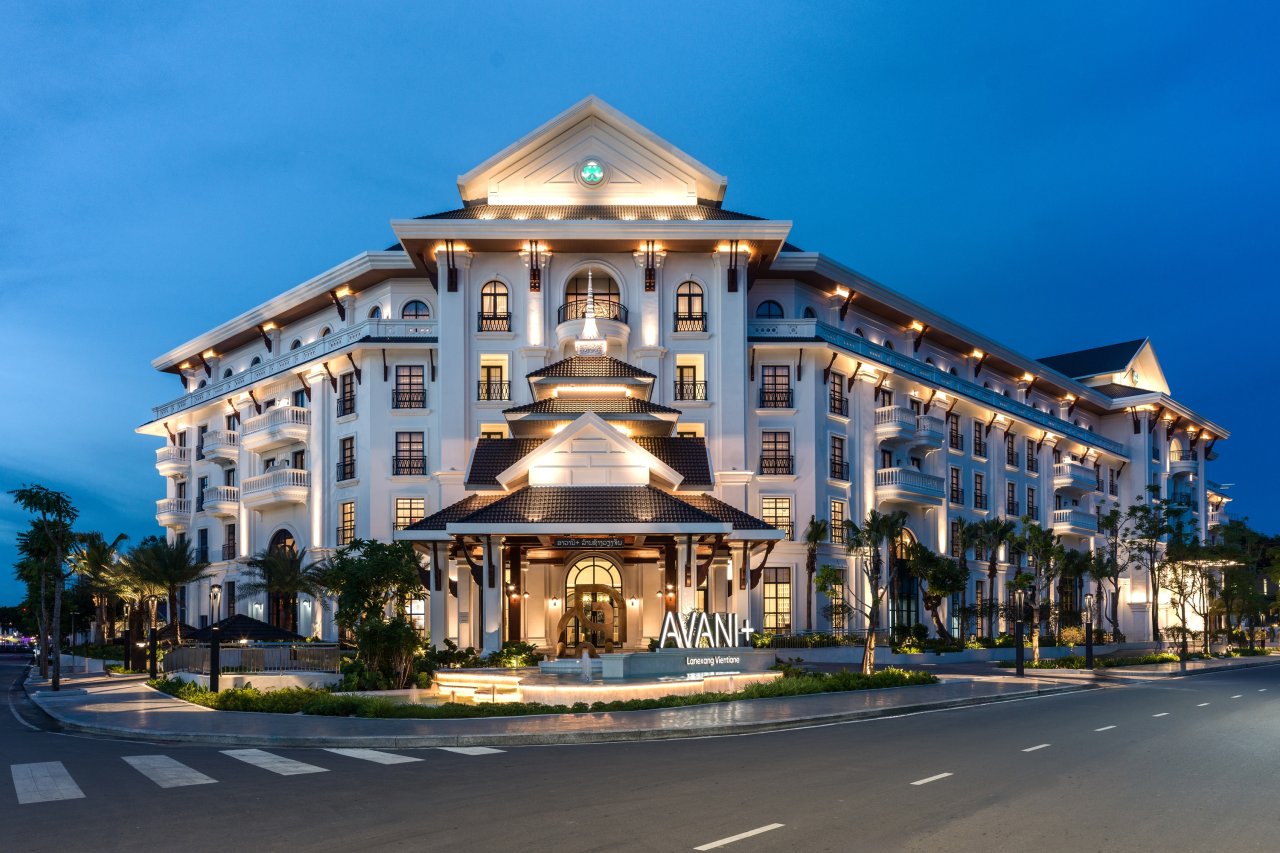
The group also completed several openings, including Avani+ Lanexang Vientiane, NH Collection Dubai Ibn Battuta and NH Guadalajara Studios, alongside the opening of its first two wholly owned hotels in Japan.
In New Zealand, Oaks Shores Resort was repositioned under the Avani Queenstown brand.
At the same time, Minor Hotels is broadening its offering with Life Longevity, a new brand dedicated to wellness and longevity, designed for resorts, urban environments and residences.
The group is also preparing to launch The Wolseley Members Club, with its first location scheduled to open at The Wolseley Hotel New York in 2027.
Asset-Light Strategy Now Dominates the Development Pipeline
One of the principal strategic conclusions from the results concerns the evolution of Minor Hotels’ business model.
More than 90% of the active development pipeline now consists of asset-light formats, primarily management and franchise agreements.
This direction forms part of the group’s asset-right strategy, which aims to progressively rebalance the portfolio between owned assets, managed properties and franchised hotels.
For Minor Hotels, the objective is to increase recurring revenue from management and franchise fees while limiting the capital requirements associated with property ownership.
This transition has several implications for investors and hotel owners:
- Expansion capacity becomes less directly dependent on the group’s own property investments.
- Potential growth in contractual revenue generated through management and franchising.
- Greater diversification of profitability sources across operations, asset ownership and owner services.
- Increased exposure to the commercial performance of partner properties without necessarily owning the underlying real estate.
The success of this model will nevertheless depend on the quality of signed agreements, their effective conversion into operating hotels and the profitability of the new management activities.

Dillip Rajakarier: Focus on Rate Discipline and Margins
Dillip Rajakarier, Group CEO of Minor International, the parent company of Minor Hotels, emphasised that the quarterly results demonstrate the value of a geographically diversified portfolio amid significant differences in market performance.
He reiterated three priorities: protecting margins, maintaining pricing discipline and accelerating the transition towards a less capital-intensive business model.
According to Rajakarier, the depth of the development pipeline should support sustainable growth, accompanied by an increasing contribution from management and franchise fees.
Strategic Analysis | More Selective Growth, Balancing Hotel Returns and Contractual Revenue
The third-quarter results highlight two distinct dynamics.
The first concerns operating performance. Minor Hotels is benefiting from its geographic diversification, enabling Asian and European markets to offset weakness in the Middle East.
The second relates to the transformation of its development model.
With more than 90% of its active pipeline structured around asset-light agreements, the group is seeking to progressively decouple network expansion from the capital intensity historically associated with hotel ownership.
For investors, this shift deserves particular attention: growth in the number of hotels is no longer, in itself, the central indicator of value creation.
The contribution of management fees and franchise royalties, the quality and financial standing of hotel-owning partners, and the ability to convert signed agreements into operational properties are becoming increasingly decisive factors.
It is also important to distinguish the 13% improvement in core profit from the 4% increase in EBITDA. These indicators measure different levels of financial performance and do not, on their own, establish that margins have improved across the board.
Finally, the outlook for the last quarter of 2026 remains mixed. Forward bookings in Thailand and the Maldives are ahead of the previous year for the fourth quarter and early 2027, while Europe & Americas and Australia & New Zealand are also showing positive momentum.
Minor Hotels’ ability to maintain rates, protect margins and convert its pipeline into contractual revenue will therefore be a key indicator of its financial trajectory in 2027.
At a Glance
Q3 2026 core profit: THB 2.1 billion, up 13% year on year.
Core revenue and EBITDA: THB 35.4 billion (+6%) and THB 7.0 billion (+4%), respectively.
System-wide RevPAR: +5%, driven by Thailand (+13%), the Maldives (+10%) and Europe & Americas (+7%).
Middle East & Africa: RevPAR down 11% amid weaker demand and regional uncertainty.
Development pipeline: 38 hotel signings representing 3,744 keys during the first nine months.
Asset-light strategy: More than 90% of the active development pipeline comprises asset-light formats.