

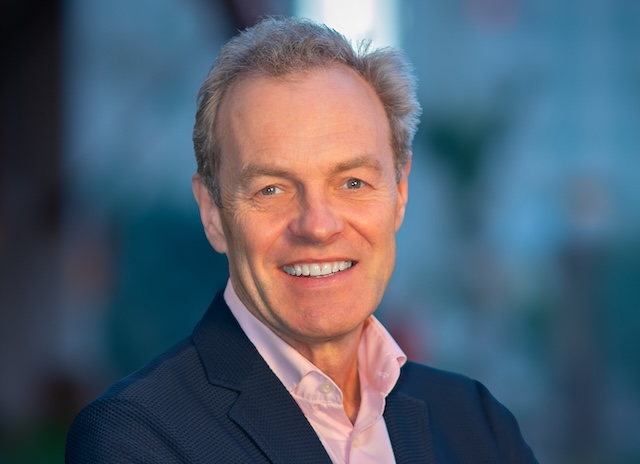


Jonathan Worsley: international expertise in hotel investment
The appointment of Jonathan Worsley to the Advisory Board of African Collaborations Group comes amid efforts to develop new economic models for sports infrastructure across Africa.
Chairman of The Bench, Jonathan Worsley is notably the founder of the Future Hospitality Summit, an international platform bringing together investors, developers, financiers and hotel operators.

Events organised by The Bench, particularly in Riyadh and Dubai, bring together leading figures in hotel investment and development.
Jonathan Worsley began his career in hotel operations with Forte and Holiday Inns before moving into consultancy with PKF and CBRE.
According to biographical information provided by ACG, he also helped establish IHIF Berlin in 1997, subsequently contributing to the development of several international hospitality networking and industry events.
Beyond conferences, his work focuses on building networks connecting investors, owners, developers and operators.
This expertise is precisely one of the contributions ACG is seeking as it structures complex projects combining real estate, tourism and sports facilities.
African Collaborations Group: a platform for project development and structuring
Founded and chaired by Nicolas Pompigne-Mognard, African Collaborations Group describes itself as a strategic project origination and collaboration platform dedicated to developing integrated sports and entertainment ecosystems across Africa.
Its ambition extends beyond promoting the construction of stadiums or other sports venues.
ACG aims to contribute to the development of mixed-use districts in which sports infrastructure acts as an anchor for complementary economic activities.
The model could incorporate hotels, restaurants, retail outlets, public spaces, leisure facilities and event venues.
The organisation seeks to bring together the stakeholders required to deliver such developments: public authorities, private investors, development finance institutions, property developers, operators, sports federations and technical partners.
Its stated objective is to support projects from initial concept and feasibility studies through financial structuring to implementation.
This approach centres on a key principle: project bankability, meaning the ability to demonstrate the economic and financial characteristics necessary to secure funding.
Hospitality as an essential component of the business model
Integrating hospitality is one of the principal strategic priorities highlighted by ACG.
Under a traditional model, revenue generated by sports infrastructure can depend heavily on competition schedules and major events.
Concentrating activity into a limited number of days can make it difficult to achieve an adequate return on investment.
By combining hotels, restaurants, retail facilities and other activities with a sports venue, a development can broaden its potential revenue streams.
Hotels can play a particularly important role in converting event visitors into overnight guests.
They can also accommodate business travellers, sports teams, event organisers, delegations and leisure visitors outside competition periods.
For ACG, these complementary uses should help sustain economic activity at the developments throughout the year.
Jonathan Worsley’s presence on the Advisory Board is expected to ensure that hotel development and investment considerations are incorporated from the earliest stages of project planning.
Attracting international capital and operators
One of the principal challenges facing ACG’s strategy is its ability to attract investors to projects combining several asset classes and economic activities.

Stadium construction, hotel development and the delivery of retail space each involve different operating models, risk profiles and investment return horizons.
Combining these components therefore requires an appropriate financial structure.
Development finance institutions may support certain infrastructure components, while real estate investors and private operators may identify opportunities in accommodation, food and beverage or retail.
Jonathan Worsley’s expected contribution lies particularly in his knowledge of international hotel investment networks and the relationships between owners, operators, developers and financiers.
His involvement in FHS Africa could also facilitate engagement with stakeholders interested in hotel development across the continent.
However, ACG does not specify in its announcement which projects Jonathan Worsley will be directly involved in or the amounts of investment currently committed.
An ambition aligned with the development of Africa’s sports economy
African Collaborations Group positions its activities within the growth prospects of Africa’s sports economy.
According to a projection cited in its announcement, the sector could reach $20 billion by 2035.
This estimate represents an industry outlook rather than a figure for investments already planned or financed.
For ACG, developing this economy requires moving beyond the construction of standalone sports facilities.
The group favours an approach that integrates such venues into urban environments capable of supporting several complementary activities.
This strategy has significant implications for urban planning, tourism, mobility and real estate development.
It also requires close coordination between public authorities, investors and future operators.
The ability to translate this ambition into projects that are actually financed and delivered will be one of the key developments to monitor.
LTH Analysis | Hospitality as a driver of sports infrastructure bankability
Jonathan Worsley’s appointment to ACG illustrates the growing convergence between hotel investment, real estate development and the events economy. Within major sports district developments, hospitality can help diversify revenue and sustain activity beyond competitions, but its viability must be underpinned by sufficiently consistent demand independent of sporting events. For investors, the challenge will therefore be to assess each component of a development against its own economic fundamentals while evaluating the synergies of the overall scheme. The Bench’s experience in connecting capital providers with operators could facilitate this process. Nevertheless, the model’s success will depend on the quality of market feasibility studies, the structuring of public-private partnerships and the ability to secure operators and long-term financing.
At a Glance
Appointment: Jonathan Worsley joins the Advisory Board of African Collaborations Group (ACG).
Announcement date: 16 October 2026.
Current role: Chairman of The Bench and founder of the Future Hospitality Summit (FHS).
ACG founder: Nicolas Pompigne-Mognard, Founder and Executive Chairman.
Strategic objective: Develop bankable, integrated sports and entertainment districts across Africa.
Hospitality component: Hotels, restaurants and leisure facilities designed to complement sports venues and generate year-round activity.
Investment approach: Bring together governments, development finance institutions, private investors, developers and operators.
Market outlook: ACG cites a projection of Africa’s sports economy reaching $20 billion by 2035; no specific project financing has been disclosed.