

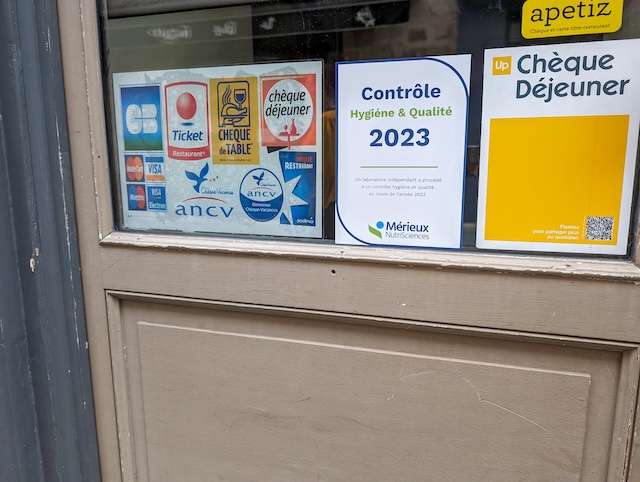


A system whose economic balance could be fundamentally altered
On 13 October 2026, the French Senate received a bill aimed at modernising and rebalancing the meal voucher system, following its adoption by the National Assembly under the accelerated legislative procedure.
Behind measures intended to simplify the use of meal vouchers and provide greater protection for merchants lies a potentially far-reaching reform for the companies that issue them.

Their business model is based on two commercial relationships: employers purchase meal vouchers for their employees, while restaurants and food retailers pay commissions and fees to accept the vouchers and obtain reimbursement.
Issuers therefore operate in two markets whose interests do not necessarily align.
Competition to attract corporate clients can lead issuers to offer commercial incentives, while commissions charged to merchants provide a source of remuneration for their services.
The reform seeks to address precisely these two mechanisms, with potentially opposing effects on issuers’ financial performance.
Ending employer discounts: Good news for established operators?
This is probably the most paradoxical provision in the proposed legislation.
The proposed Article L. 3262-1-1 of the French Labour Code would prohibit specialist issuers from granting employers discounts, rebates or equivalent benefits that reduce the purchase price of meal vouchers below their face value.
In other words, issuers would no longer be able to use this mechanism to offer employers vouchers worth more than the amount actually paid.
For major operators, this prohibition could provide an economic advantage.
By restricting certain customer acquisition and retention practices, it could potentially reduce the cost of contracts with employers, particularly large corporate accounts.
It could also alleviate some of the competitive pressure associated with tender processes.
Established issuers could benefit particularly from this change: they already have substantial customer portfolios and might retain some of the savings generated by eliminating previously granted discounts.
However, this potential benefit should not be overstated.
The legislation would not eliminate competition between issuers. Instead, competition could shift towards management fees, digital services, HR-related solutions and employee-facing features.
Nor does it guarantee that the savings achieved would translate entirely into higher margins.
Nevertheless, the underlying principle remains: a provision presented as a means of rebalancing the market could also improve the commercial economics of certain issuers.
Restaurant commissions: The real threat to revenue
The other major component of the reform could prove considerably less favourable to operators.
The bill provides for a substantial increase in transparency surrounding commissions and fees charged to restaurants and food retailers.
Each establishment would receive an annual statement detailing all amounts charged by its issuer, directly or indirectly, including certain fees associated with payment services.
These amounts would also be expressed as a percentage of the value of meal vouchers accepted.
Specialist issuers would also be required to publish their standard pricing terms, including an overall rate for each commercial package.
Finally, they would have to provide the authorities with annual information on vouchers issued and remuneration received from employers and merchants. A summary would be made public, subject to the protection of commercially confidential information.
For restaurant operators, this transparency would provide a tool for comparison and negotiation.
For issuers, it could increase competitive pressure on pricing, particularly where fee structures are complex or difficult to reconcile with the amounts actually received by merchants.
However, the principal risk lies elsewhere.
The proposed legislation would authorise the French Government to cap commissions and fees charged to merchants, through a decree issued by the Conseil d’État following consultation with the French Competition Authority.
If this power were exercised, issuers charging above the prescribed ceiling would be required to reimburse any amounts improperly collected.
One essential distinction must be emphasised: the current bill specifies no numerical ceiling and does not make the introduction of a cap automatic.
Indeed, it stipulates that any rate introduced must allow issuers to cover the costs of accepting and reimbursing vouchers, while providing normal remuneration for the activity.
The economic significance of this measure would therefore depend entirely on the future regulatory framework.
A relatively permissive cap could have a limited impact. Conversely, a ceiling substantially below the rates currently charged by certain operators could directly affect their revenue.
Without knowing the rates that might ultimately be adopted, it would be premature to identify winners and losers.
Greater pricing transparency, but not necessarily better conditions for new entrants
The reform could also change the competitive dynamics between issuers.
For established players such as Edenred, Pluxee and Up, the prohibition on discounts below face value could help stabilise the economics of certain existing contracts.
New entrants, meanwhile, could lose a customer acquisition tool if their strategies relied on this type of financial incentive.
However, mandatory transparency over merchant commissions could have the opposite effect.
An operator offering straightforward, transparent and competitive pricing could find it easier to demonstrate the value of its proposition to restaurants.
Technology, application quality, reimbursement speed, acceptance network coverage and associated services could become increasingly important competitive differentiators.

The reform could therefore favour the most efficient operators rather than simply the largest.
Much would depend on each issuer’s cost structure, exposure to merchant commissions and commercial policy towards employers.
Digitalisation: An operational advantage for the most efficient platforms
The bill also provides for the generalisation of digital meal vouchers.
This development should progressively eliminate costs specifically associated with paper vouchers, including production, physical distribution, collection and manual processing.
It could also simplify reimbursement procedures and improve transaction traceability.
For issuers that have already invested extensively in digital infrastructure, the disappearance of paper vouchers could generate operational savings.
However, these benefits must be weighed against the ongoing costs of payment platforms, cybersecurity, IT infrastructure and regulatory compliance.
Digitalisation therefore does not eliminate processing costs; it changes their nature.
Operators capable of processing large transaction volumes at competitive unit costs could gain an advantage.
Conversely, those whose infrastructure still requires substantial investment could face additional pressure.
Three-year validity: A financial impact that is harder to assess
The proposed legislation would extend the period during which meal vouchers can be used to three years.
For employees, this measure would reduce the risk of losing the benefit of vouchers that have not been used within a shorter period.
For issuers, it would extend the period during which the corresponding balances must be managed.
The bill also maintains the principle that the equivalent value of expired vouchers should be allocated to companies’ social and cultural activities, subject to authorised deductions.
It also provides for a report on the management of lost or expired vouchers, the amounts retained by issuers and their actual allocation.
This development would increase scrutiny of the traceability of funds.
Nevertheless, its precise economic impact remains difficult to establish without detailed information on outstanding balances, redemption periods and the financial management arrangements specific to each operator.
Will restaurant operators genuinely benefit from the reform?
For the hotel and restaurant industry, the central question remains the cost of accepting meal vouchers.
Greater commission transparency should enable operators to identify more clearly what they actually pay.
It could also facilitate comparisons between issuers and strengthen their negotiating position.
However, it does not guarantee an automatic reduction in fees.
Any reduction would depend either on competition between operators or on the effective introduction of a regulatory cap.
The bill also provides for meal vouchers to be used every day of the week, including Sundays and public holidays.
For restaurants, particularly those generating substantial weekend business, this change could facilitate payments and alter the distribution of customer spending.
It would not, however, necessarily increase the total amount spent by employees.
Furthermore, making permanent the ability to purchase food products used to prepare meals would maintain competition between restaurants and food retailers for spending funded by meal vouchers.
The economic benefits of the reform for restaurant operators will therefore depend as much on future commission levels as on consumer behaviour.
LTH Analysis | The real question: Who will retain the margin?
The proposed legislation has a feature that has received relatively little attention: it could simultaneously reduce certain commercial expenses incurred by issuers while limiting part of their revenue.
Prohibiting discounts below face value could potentially improve the profitability of employer contracts.
Conversely, commission transparency and, above all, the possibility of a cap could put pressure on revenue generated from restaurants and other merchants.
The overall outcome will depend on the relative importance of these two effects.
For listed operators, particularly Edenred and Pluxee, the issue also concerns regulatory visibility and the predictability of margins in the French market.
Investors will need to assess each group’s exposure to merchant commissions, the potential savings from reduced commercial discounts and its ability to absorb additional compliance requirements.
For privately held operators, the same equation will arise in terms of competitiveness and financing future development.
The reform could therefore accelerate a shift towards a business model increasingly based on transaction volumes, technological efficiency and service quality.
The paradox is therefore genuine: legislation designed to provide greater protection for restaurants could also benefit the best-positioned issuers, particularly if savings on commercial discounts exceeded losses from commissions.
However, the reverse outcome remains equally possible.
The principal uncertainty is the level of any future regulatory cap, which could determine much of the reform’s economic impact.
At this stage, the bill has been transmitted to the Senate and has not been definitively adopted. Its main provisions are scheduled to take effect on 1 January 2028, subject to completion of the legislative process.
At a Glance
Legislation: French meal voucher reform adopted by the National Assembly and transmitted to the Senate on 13 October 2026.
Potential upside for issuers: Ban on commercial discounts reducing voucher prices below face value.
Main downside: Greater transparency and possible cap on merchant commissions.
Competitive implications: Potential advantage for efficient operators with strong digital platforms.
Digitalisation: Fully digital meal vouchers.
Validity: Three-year usage period.
Hospitality impact: Better visibility of merchant fees, without guaranteed reductions.
Key uncertainty: Whether a commission cap will be introduced and at what level.
Expected implementation: 1 January 2028, subject to final legislative approval.
Source: French Senate, Bill No. 32 (2026–2027), aimed at modernising and rebalancing the meal voucher system, transmitted on 13 October 2026.