

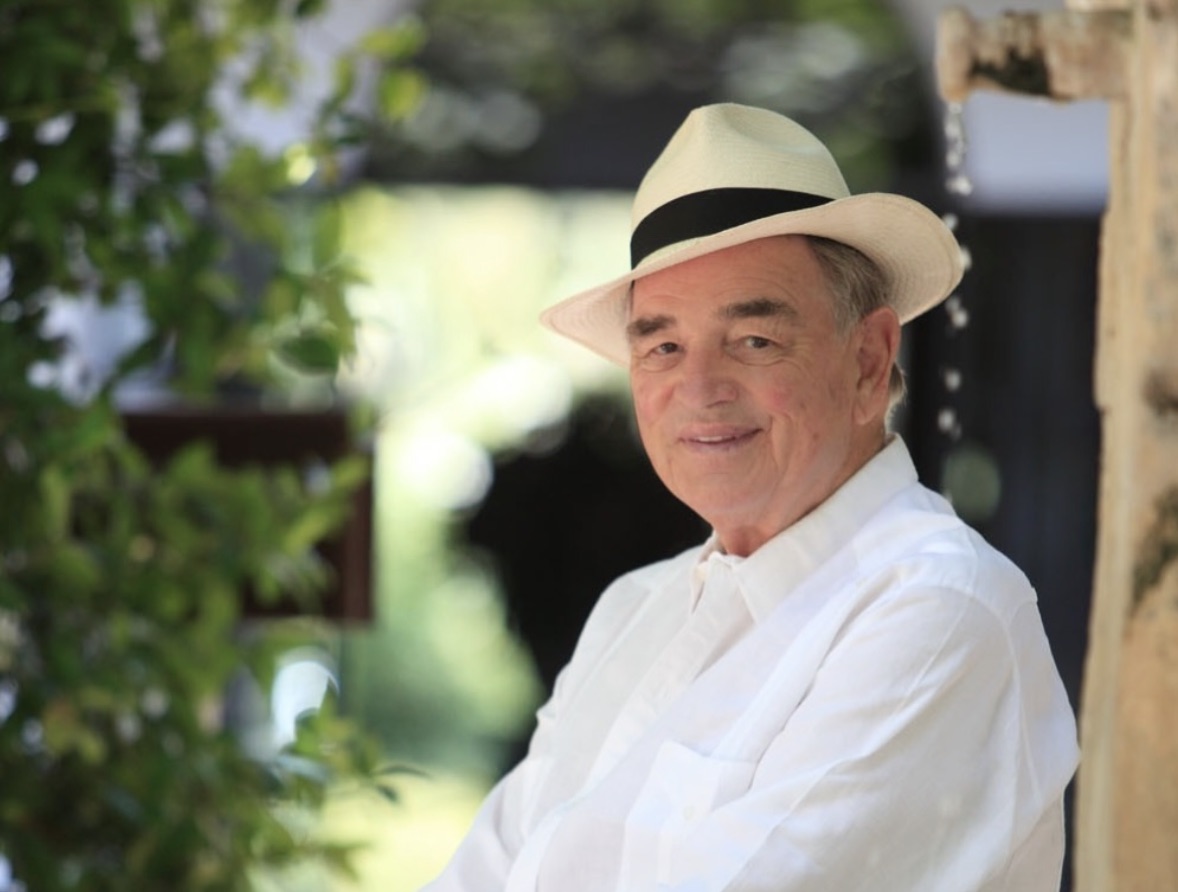


A pioneer of the Costa del Sol
Marbella has lost one of the figures who helped transform it into an international luxury tourism destination. Count Rudi’s career is inseparable from the history of Marbella Club, the hotel that established the Costa del Sol as a preferred destination for Europe’s aristocracy during the second half of the twentieth century.
Arriving when Marbella was still a small coastal town, he worked alongside his cousin, Prince Alfonso de Hohenlohe, to develop what would become one of Spain’s most celebrated hotels. Together, they attracted royal families, artists and wealthy international guests to this stretch of the Andalusian coastline, transforming a small Mediterranean hotel into an international gathering place.
Marbella Club announces his death
Marbella Club itself announced the death of its former General Manager on Sunday, 18 October. In a message published on social media, the hotel paid tribute to a mentor, a friend and an essential part of its own history.

According to local media, the hotel’s teams highlighted his exceptional sense of hospitality and his attention to the details that make a stay memorable. The property’s owner, Jennica Arazi, emphasised that he had taught them that a person’s true legacy lies in what they pass on to others. Marbella’s Mayor, Ángeles Muñoz, also paid tribute to his lasting contribution to the city.
From Saxony to Lausanne
Born on 25 September 1932 at Wechselburg Castle in Saxony, Rudolf von Schönburg-Glauchau came from a German aristocratic family. In May 1945, aged twelve, he was forced to leave the family’s estates as they fled westwards in Germany ahead of advancing Soviet troops.
This upheaval preceded his decision to pursue a career in hospitality. In 1953, he began studying in Lausanne, where he obtained a qualification in hotel management while gaining experience at luxury establishments in Switzerland and Germany.
Twenty-two years as General Manager
Prince Alfonso de Hohenlohe appointed him Assistant Manager of Marbella Club in late 1956. The hotel had opened two years earlier, with approximately twenty guestrooms, a dining room and a bar housed within a former private property.

Following a two-year period in Mexico, he returned in 1961 to become General Manager, a position he held until 1983. During those years, Marbella Club consolidated its international reputation and became a meeting place for aristocrats, business leaders, artists and members of royal families.
Audrey Hepburn, Grace Kelly, Elizabeth Taylor, the Duke and Duchess of Windsor, Brigitte Bardot and Sean Connery were among its guests, alongside Gunter Sachs, Maria Callas and Aristotle Onassis. In 1993, Count Rudi renewed his association with the hotel as an adviser.
🔗 Related coverage on LTH: Marbella, Spain | Francesco Roccato appointed General Manager of Puente Romano Marbella
A partnership that shaped Marbella Club
The division of responsibilities between the two men played a defining role in the hotel’s development. Alfonso de Hohenlohe provided the vision and international connections, while Count Rudi brought the professional expertise required to establish a hospitality model built on personalised attention and discretion.
His philosophy rested on a few essential principles: understanding each guest’s preferences, providing individually tailored service and ensuring confidentiality. In an interview published by Marbella Club, he advised aspiring five-star hospitality professionals to love their work and devote the greatest possible attention to their guests.
His life was chronicled in Un hombre afortunado (A Fortunate Man), a book by José María Sánchez-Robles presented in 2022 to mark his 90th birthday. His honours included the Order of Isabella the Catholic, Germany’s Federal Cross of Merit and the Silver Medal for Tourism Merit.
A legacy woven into Marbella’s history
Having made Marbella his permanent home, he married Princess Marie-Louise of Prussia in 1971. She has long been involved in local charitable activities. He is survived by his wife and their two children, Sophie and Friedrich.
LTH Analysis – The history of Marbella Club mirrors that of the Costa del Sol, where the arrival of an international clientele during the 1950s and 1960s encouraged the development of hotels, residences and services dedicated to luxury tourism. The market continues to attract operators and investors, as illustrated by the planned opening of Waldorf Astoria in Marbella in 2029 and the launch of the 1912 Collection in Marbella’s old town.
With his passing, Marbella has lost one of the last representatives of the generation that transformed a coastal town into a destination of global standing. Luxury hospitality has lost one of the pioneers who placed service excellence and personal relationships on an equal footing with physical facilities.
🔗 Related coverage on LTH: 2026, France | Remembering Laetitia Morlat, founder of Quiet Luxury Group
View this post on Instagram