

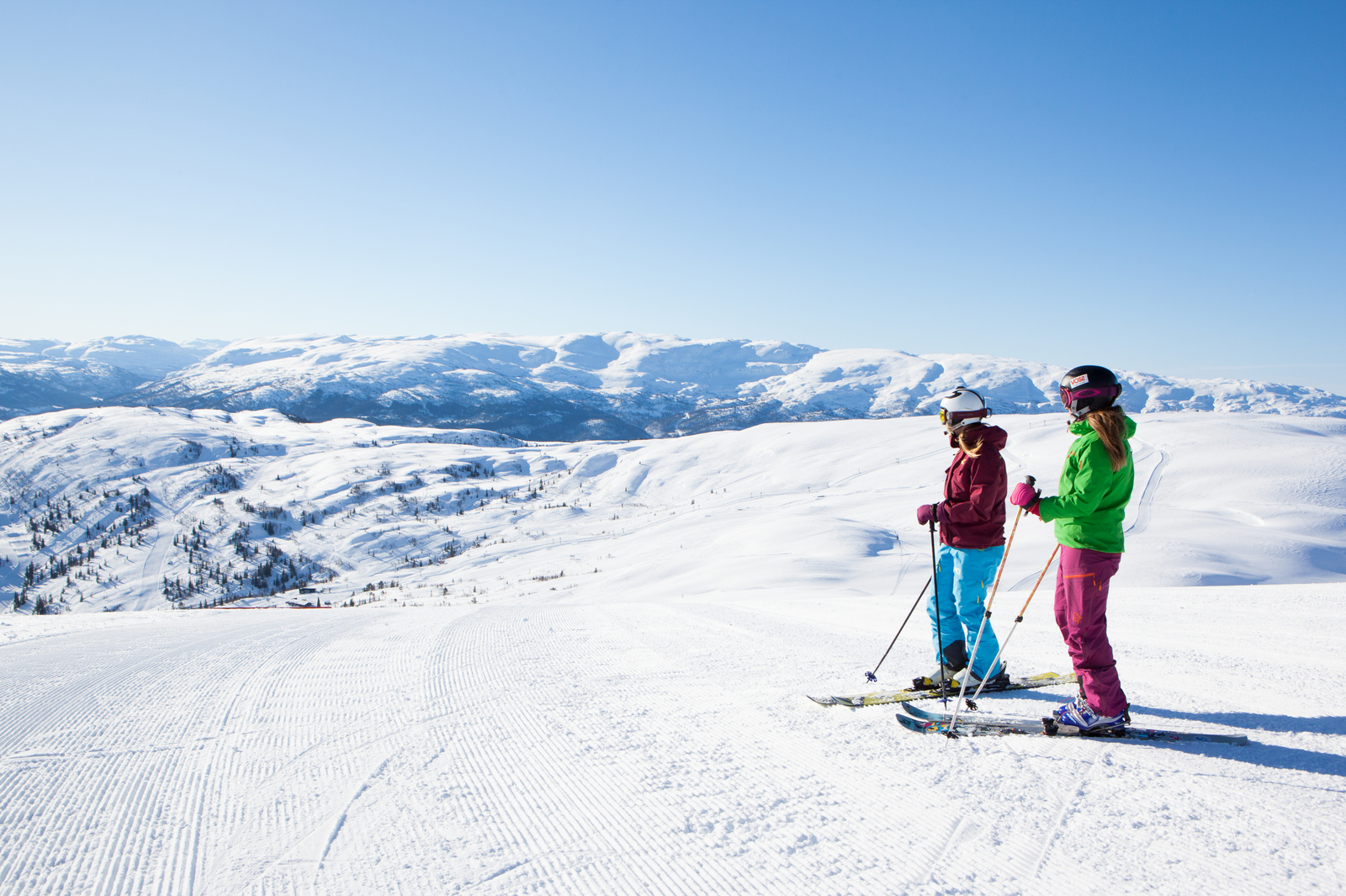


A commercial campaign to attract British skiers
In a statement published on 15 October 2026, Norway Home of Skiing announced a campaign designed to position Norwegian ski resorts as an alternative to traditional Alpine destinations.
The initiative brings together four partners: Norway Home of Skiing, an organisation promoting ski holidays; Alpinco, a mountain resort operator; Avinor, which manages Norwegian airport infrastructure; and airline Norwegian Air Shuttle.
It also has the support of several specialist British ski travel companies, including Ski Safari, Ski Solutions and Crystal Ski.

The programme includes digital campaigns, consumer-facing promotional activities and joint commercial initiatives with British distributors.
Its marketing proposition rests on three elements: reliable snow conditions, slopes presented as less crowded and a distinctive Scandinavian winter experience compared with the Alps.
These advantages represent the commercial positioning claimed by the campaign’s promoters, rather than a quantified comparison of snow conditions or visitor numbers between the two regions.
From 150,000 to 200,000 guest-nights: A 33% growth target
Trevor De Villiers, CEO of Norway Home of Skiing, has set a target of 200,000 British guest-nights during winter 2026/27, compared with a baseline of 150,000.

This would represent an additional 50,000 guest-nights, or approximately 33% growth.
The British market is therefore emerging as a commercial priority for the Norwegian partners, which are seeking to develop international demand beyond their established Norwegian and Scandinavian markets.
However, the ambition extends beyond the coming winter season.
The partners envisage a five- to ten-year horizon to establish Norway as a credible long-term alternative to Alpine destinations among British skiers.
The statement does not specify the campaign budget or how the visitor targets will be allocated between participating resorts.
Norwegian increases capacity from London, Edinburgh and Manchester
Air connectivity is one of the campaign’s principal drivers.
Norwegian Air Shuttle has announced increased capacity to Oslo, with more direct flights from London and Edinburgh than during the previous winter.
The most clearly quantified increase concerns Manchester, where the airline plans to raise its service from two to five weekly departures, including a Sunday flight designed to accommodate British holidaymakers’ travel patterns.
Magnus Thome Maursund, Chief Commercial Officer at Norwegian, explains that the strategy is intended to use winter air capacity to attract more British travellers to Norway, rather than allocating it primarily to Norwegians travelling to the United Kingdom.
Combining resort promotion, tourism distribution and airline capacity is therefore intended to turn interest in the destination into actual bookings.
Ten mountain destinations involved
The campaign promotes ten Norwegian ski resorts and destinations:
- Oppdal, Kvitfjell and Hafjell;
- Beitostølen, Gausta and Geilo;
- Myrkdalen, Narvik, Norefjell and Voss.
These destinations have different profiles, ranging from family-oriented resorts to areas more focused on alpine skiing and active winter holidays.
Norway also has an international event that could strengthen its visibility: Narvik is scheduled to host the FIS Alpine World Ski Championships in February 2029.
The event could help raise the destination’s international profile, although its impact on tourism demand remains to be measured.
Expected benefits for accommodation providers and resorts
The target for growth in British guest-nights is directly relevant to the economic activity of mountain destinations.
Increased international visitor numbers could support hotels, serviced holiday residences, rental chalets and other forms of accommodation, as well as ski lifts, restaurants, ski schools and leisure providers.
For operators, the challenge includes diversifying source markets and developing distribution through British tour operators.
Jonas Bjørnerud, Commercial Director at Alpinco, highlights the additional accommodation capacity available in Norwegian destinations and the value of cooperation between the industry’s principal stakeholders.
However, the 200,000 guest-night target relates to the overall tourism volume announced by the partners. The statement does not specify the proportion attributable to hotels or the additional revenue expected for accommodation providers.
LTH Analysis | Competition between ski destinations is also being fought in the skies
Norway’s campaign highlights a shift in competition between mountain destinations: the quality of a ski area is no longer sufficient on its own to determine a resort’s international appeal. Accessibility, commercial distribution and the ability to offer a differentiated experience are becoming decisive competitive factors.
Bringing together an airline, an airport operator, resort operators and British distributors from the outset reflects an integrated approach to the tourism distribution chain. The objective is not merely to stimulate demand, but also to ensure that the airline seats and booking channels required to convert that demand are available.
For Norwegian accommodation providers, attracting additional British visitors could improve the diversification of their customer base. It may also change distribution practices, particularly through the development of room allotments and partnerships with tour operators.
In competing with the Alps, Norway is seeking to build its value proposition around its natural environment, snow conditions and what it presents as less crowded resorts. These claims will nevertheless need to be assessed against the overall competitiveness of the holiday offering: transport prices, accommodation costs, resort transfers and spending on services at the destination.
Finally, the guest-night growth target should not be confused with an equivalent increase in operators’ profitability. This will depend on visitor spending, the cost of acquiring these new customers and the ability of businesses to protect their margins.
Norway is therefore seeking more than simply attracting additional skiers: it is attempting to establish an international commercial ecosystem capable of converting its tourism potential into recurring economic activity.
At a Glance
Destination: Norway is targeting British skiers as an alternative to traditional Alpine resorts.
Partners: Norway Home of Skiing, Alpinco, Avinor and Norwegian Air Shuttle.
Target: Increase British guest-nights from 150,000 to 200,000 in winter 2026/27, a rise of approximately 33%.
Air connectivity: More direct capacity from London and Edinburgh, with Manchester services increasing from two to five weekly departures.
Distribution: Campaign support from Ski Safari, Ski Solutions and Crystal Ski.
Long-term ambition: Establish Norway as a stronger contender in the UK ski market over five to ten years.