

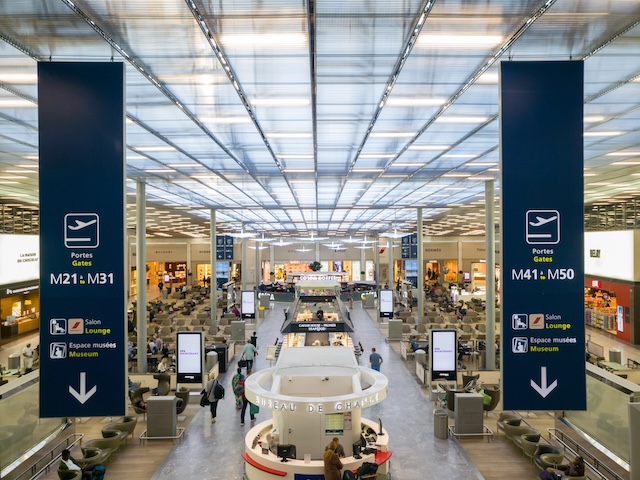


The French State and Groupe ADP reached an agreement on 29 July 2026 on the terms of the future economic regulation contract for Paris’s airports, described by Philippe Pascal, Chairman and CEO of the Group, as the most ambitious investment programme ever undertaken in Paris in air transport. Worth €8.2 billion over eight years, the plan will equip Roissy with a new international satellite at Terminal 2G, an extension of the LISA automated line and redesigned infrastructure, raising the platform’s capacity to 90 million passengers a year by 2035, up from around 72 million today.
This funding relies primarily on higher airport charges paid by airlines, with an average increase of 2.1 points above inflation per year over the life of the contract. This prospect has drawn opposition from several carriers, including easyJet and Scara, who argue the distribution of the burden is skewed in favour of Air France’s connecting-hub model. The project still faces a consultation with airlines scheduled for September, before receiving a binding opinion from the Autorité de régulation des transports in the autumn, ahead of the contract’s planned entry into force in early 2027.

This funding mechanism, specific to passenger and aircraft charges, does not directly apply to hotel properties located within or near the airport zone, whose financial relationship with ADP falls under a separate framework, that of the Group’s Real Estate segment commercial leases, revalued annually according to standard indexation clauses. However, the project’s stated goal of absorbing 18 million additional passengers a year by 2035 points to a structurally favourable outlook for hotel supply in the Roissy area, expected to support growth in air traffic, transit and surrounding economic activity.

The Roissy-CDG airport zone already hosts a dense and diverse hotel offering, spanning international properties such as the Hilton Paris Charles de Gaulle, the Paris Marriott Charles de Gaulle Airport Hotel and the Van der Valk Hotel Paris CDG Airport, alongside budget and midscale brands such as Novotel, B&B Hotels, Campanile and Clarion, notably located in the Paris Nord 2 international business park. This concentration reflects the historic importance of transit and business traffic generated by the hub, a dynamic the platform’s capacity increase is intended to reinforce.
Beyond passenger traffic alone, Roissy’s planned modernisation also reflects a bid to remain competitive against major international hubs, London, Frankfurt, Amsterdam and Istanbul, cited by ADP executives as benchmarks. A more attractive platform for international connections, combined with improved rail links and terminal access, could strengthen the area’s appeal to business and transit travellers, the main driver of hotel demand around the airport.
===AT_A_GLANCE===
At a Glance
Roissy-CDG Expansion — Economic Regulation Contract 2027-2034 – Total investment: €8.2 billion over 8 years – Capacity target: 90 million passengers/year by 2035 (+18 million/year) – Funding: higher airline charges (avg. +2.1 points above inflation/year), paid by airlines — outside the hotel scope – ADP Real Estate segment (hotel/office leases): separate from the CRE, revalued via standard annual indexation clauses – Timeline: airline consultation in September 2026, binding ART opinion in autumn, entry into force targeted early 2027 – Pushback: easyJet, Scara, over the distribution of effort between connecting and point-to-point traffic – Hotel zone affected: Hilton, Marriott, Van der Valk, Novotel, B&B Hotels, Campanile, Clarion (notably Paris Nord 2)