


A new tagline to strengthen the archipelago’s international positioning
During the country’s independence celebrations on 27 October 2026, the Saint Vincent and the Grenadines Tourism Authority (SVGTA) officially unveiled a new tourism identity for Saint Vincent and the Grenadines.
The destination has adopted the tagline “Set Your Spirit Free”.
The new brand platform seeks to express the distinctive characteristics of the archipelago, comprising 32 islands and cays, by highlighting its volcanic landscapes, cultural heritage and marine environment.

The identity was developed through a collaborative process involving a creative agency and local representatives. Focus groups were used to assess the proposals against the perceptions of Vincentian stakeholders, helping to preserve the destination’s authenticity.

For Shafia London, Chief Executive Officer of the SVGTA, the new identity should enable Vincentians, both at home and abroad, to recognise themselves in the country’s tourism image and contribute to its international profile.
Three pillars to structure tourism promotion
The new identity is built around three complementary pillars designed to structure the archipelago’s international communications.
Nature and Adventure

The first pillar showcases volcanic landscapes, tropical forests, waterfalls and outdoor exploration activities.
It draws particularly on the silhouette of La Soufrière, Saint Vincent’s iconic volcano, to evoke exploration and a connection with the natural environment.
Culture and Celebration
The second pillar highlights local traditions, festivals, music, gastronomy and crafts.
It also draws inspiration from the heritage of the archipelago’s earliest inhabitants, particularly the petroglyphs preserved at Layou Petroglyph Park.
Marine Paradise
The third pillar emphasises the maritime character of Saint Vincent and the Grenadines.
Island-hopping, marine activities and coastal landscapes are central elements of the visitor experience.
By bringing these three dimensions together, the SVGTA aims to move beyond communications focused exclusively on beaches and scenery, presenting a destination offering a wider range of experiences.
A logo inspired by the country’s geography and heritage
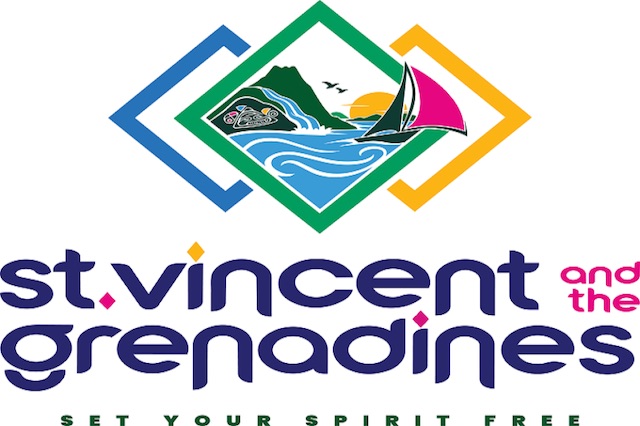
The new visual identity incorporates several symbolic elements.
A mountain recalls the volcanic profile of La Soufrière, while a waterfall and birds in flight evoke the natural environment.
A graphic symbol inspired by the Layou petroglyphs represents the archipelago’s cultural heritage and traditions.
The sea, a sailing boat, island silhouettes and the sun illustrate the destination’s maritime character.
The composition is framed by three diamond shapes referencing the national flag.
The typography has also been specially developed, particularly the shape of the letter “n”, in reference to the distinctive arches of Kingstown, the capital, nicknamed the City of Arches.
The colour palette draws inspiration from the local landscape: turquoise waters, forests, sunshine, flowers and sunsets.
This identity now provides a common visual language intended to harmonise the destination’s tourism communications.
A differentiation strategy in a competitive market
Through this rebranding, Saint Vincent and the Grenadines is seeking to reinforce its distinctive position in the international tourism market.
In the Caribbean, where several destinations compete for similar visitor segments, differentiation depends partly on the ability to communicate a distinctive identity beyond the beach-related attributes traditionally associated with the region.
The new tagline therefore aims to connect the different components of the tourism offering: island stays, nature exploration, cultural experiences and recreational sailing.
It also provides tourism professionals with a communications framework capable of strengthening consistency between official destination promotion and the experiences offered commercially.
However, the announcement does not specify the budget allocated to the rebranding, the timetable for its international rollout or any quantified visitor targets associated with the new identity.
LTH Analysis | Destination branding as a tool to strengthen the tourism offering
For hotel operators and investors, the evolution of Saint Vincent and the Grenadines’ tourism identity has implications extending beyond institutional communications.
A clearly positioned destination brand can help strengthen a territory’s commercial visibility and improve the coherence of its tourism offering.
For an archipelago comprising numerous islands, one of the challenges is to bring different experiences and products together under a shared promise.
The choice of three complementary pillars therefore enables the destination to appeal to several visitor segments, particularly travellers interested in nature, cultural experiences and marine activities.
For the hospitality sector, this approach can support commercial marketing efforts, particularly for properties seeking to emphasise their local identity and the experiences available around a stay.
It could also help broaden international distributors’ perceptions of the destination.
However, the economic effectiveness of the new identity will depend on how it is implemented in practice: promotional campaigns, partnerships with airlines and tour operators, inter-island accessibility, the quality of the tourism offering and the ability to convert brand awareness into bookings.
At this stage, the SVGTA has primarily announced a brand repositioning. Its impact on visitor flows and hotel performance will need to be assessed through the results of future marketing campaigns.
At a Glance
Destination: Saint Vincent and the Grenadines, Caribbean.
Announcement: New tourism brand identity unveiled on 27 October 2026.
Tagline: “Set Your Spirit Free”.
Three pillars: Nature and Adventure, Culture and Celebration, and Marine Paradise.
Brand identity: Inspired by La Soufrière volcano, Indigenous heritage, sailing traditions and the national flag.
Strategic objective: Strengthen international destination recognition through a distinctive and unified tourism identity.