

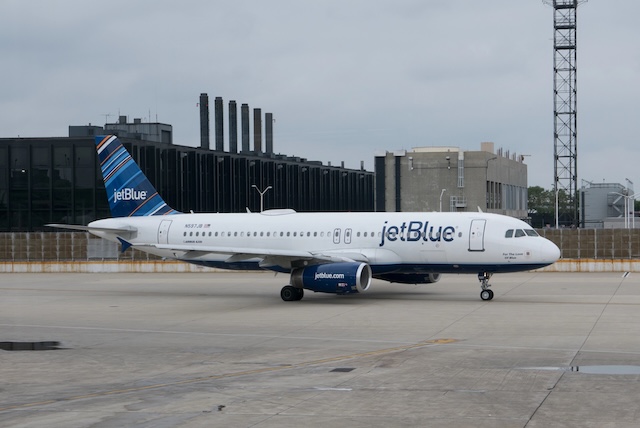


Revenue growth is no longer enough to protect margins
The aviation industry remains particularly exposed to fluctuations in energy prices.
Fuel represents one of airlines’ largest operating expenses, alongside labour, maintenance, fleet and other operational costs.
When fuel prices rise sharply, carriers must balance several competing priorities: protecting margins, maintaining competitive fares and preserving sufficient capacity to meet demand.

These trade-offs become particularly complex in leisure markets where the cost of air travel is a decisive component of the overall holiday budget.
The financial results published by JetBlue Airways on 26 October 2026 provide an illustration of this challenge.
JetBlue: revenue up 21.1%, but fuel prices rise 57%
In the third quarter of 2026, JetBlue, a US low-cost scheduled airline, reported revenue of $2.8 billion, representing a 21.1% year-on-year increase.
With capacity increasing by only 2.3%, this growth primarily reflected an improvement in unit revenue.

Revenue per available seat mile (RASM) rose by 18.4%, supported by improved pricing management, the development of premium offerings and resilient demand.
However, the average fuel price reached $3.91 per gallon, an increase of 57% compared with the third quarter of 2025.
Cost per available seat mile (CASM) increased by 19.4%.
JetBlue estimates that improved revenue enabled it to offset approximately 87% of the increase in its fuel costs.
Despite this commercial performance, the airline remains loss-making.
According to Reuters, its cumulative net losses reached $823 million during the first nine months of 2026.
A decline in the value of some of its bonds also raised concerns in financial markets.
Speaking on 27 October, Joanna Geraghty, CEO of JetBlue, nevertheless stated that the airline was not negotiating with creditors and was not considering a debt restructuring.
JetBlue held $2.2 billion in liquidity at the end of the third quarter and maintains its objective of achieving sustainable operating profitability in 2027.
First risk for hospitality: pressure on flight-and-hotel packages
Higher air transport costs can have particularly significant consequences for destinations marketed through packages combining flights and accommodation.
Under this model, consumers primarily consider the total cost of their holiday.
An increase in airfares can therefore materially affect the competitiveness of a tourism offering, even when hotel prices remain unchanged.
This is particularly relevant to all-inclusive holidays, which are widely offered in certain coastal destinations.
These products are often marketed to customers who are sensitive to the overall holiday price, with capacity commitments negotiated between tour operators, airlines and accommodation providers.
When air transport becomes more expensive, several adjustments may follow.
Distributors may seek to pass the increase on through higher selling prices, potentially weakening demand.
Alternatively, they may attempt to preserve the price attractiveness of packages by renegotiating commercial terms with hotels.
Finally, deteriorating profitability prospects may prompt them to reduce airline capacity or contracted room allocations in certain destinations.
For resorts heavily dependent on tour operators, rising fuel prices can therefore create indirect pressure on hotel net rates, occupancy and operating margins.
The risk of a margin squeeze for all-inclusive resorts
The situation can become particularly challenging for properties whose business models depend on high volumes and rigorous cost control.
All-inclusive resorts must finance a range of services included in the holiday price: accommodation, food, beverages, entertainment and sometimes additional activities.
These properties may also face increases in their own energy, food and logistics costs.
If rising air transport costs simultaneously lead distributors to put pressure on hotel rates, resorts may face a margin squeeze: increasing operating expenses combined with pressure on net revenue per guest.
This risk is particularly significant for properties whose distribution depends on a limited number of tour operators or source markets.
However, it does not affect the entire all-inclusive sector uniformly.
Properties with a diversified customer base, strong brand recognition, substantial direct distribution or premium positioning may have greater commercial flexibility.
Second risk: declining competitiveness in destinations dependent on low-cost airlines
The expansion of low-cost airlines has fundamentally transformed the accessibility of many tourism destinations.
The proliferation of direct routes and lower travel costs have supported growth in several leisure markets, particularly in Europe and around the Mediterranean basin.
However, this dynamic partly depends on airlines’ ability to offer attractive fares while maintaining competitive unit costs.
A sustained increase in fuel prices could alter this balance.
Airlines may need to increase fares, reduce frequencies on certain routes or redeploy aircraft towards destinations offering better profitability prospects.
For destinations whose visitor numbers depend heavily on a small number of low-cost routes, these decisions can become a source of economic vulnerability.
The risk is particularly pronounced where the local tourism offering depends on mass-market customers who are highly sensitive to ticket prices and have numerous alternative destinations available.
A destination may retain competitively priced accommodation while becoming less attractive if the cost of reaching it rises too sharply.
Conversely, destinations benefiting from more diversified demand, multiple transport options or strong intrinsic appeal may be better positioned to absorb these changes.
Third risk: are budget accommodation providers on the front line?
Rising air transport costs could also have different effects across accommodation segments.
Low-cost airlines have helped make international travel accessible to a wider audience, particularly younger travellers, students, backpackers and tourists with limited budgets.
These customers represent a significant share of demand for youth hostels, hostels, budget hotels and other affordable accommodation formats.
However, when airfares account for a growing proportion of the total travel budget, travellers face more choices: shortening their stay, selecting a closer destination, postponing their trip or deciding not to travel.
A sustained increase in airfares could therefore directly affect room-night volumes at certain budget accommodation properties, particularly in destinations heavily dependent on low-cost air services.
The risk could be amplified for properties whose business models rely on high occupancy, moderate average room rates and international customers who are sensitive to price fluctuations.
Nevertheless, the opposite effect could also emerge.
Travellers wishing to maintain their holidays despite higher transport costs might reduce their accommodation budgets and favour less expensive properties.
Hostels and budget hotels could therefore benefit from customers trading down from higher accommodation segments.
The decisive question would be whether savings on accommodation are sufficient to offset higher transport costs, or whether those costs ultimately lead to a contraction in tourism demand.
For operators and investors in the economy segment, this development highlights the importance of customer diversification, domestic demand and exposure to source markets served by low-cost airlines.
The total holiday cost: a new indicator of competitiveness
For tourism professionals, the challenge is to stop considering room rates and airfares separately.
Travellers generally make their decisions based on an overall budget covering transport, accommodation, food and beverage, and expenditure at the destination.
An increase in air transport costs can therefore reduce the budget available for accommodation or encourage travellers to choose a competing destination.
This is particularly important for long-haul and island destinations, where air travel represents a substantial proportion of the total holiday cost.
It also applies to European markets dependent on seasonal tourism flows and low-cost air services.
For hoteliers, monitoring changes in tourist arrivals or bookings alone may become insufficient.
Analysis should also incorporate airfares, scheduled airline capacity, decisions to open or discontinue routes and the concentration of source markets.
Potential implications for hotel investment
Dependence on air transport also represents a risk factor for real estate investors and hotel developers.
A resort located in a destination where visitor numbers depend primarily on a handful of air routes has a different risk profile from a property benefiting from diversified demand.
In the event of a sustained reduction in airline capacity, the consequences may affect several indicators: occupancy, average daily rate, RevPAR, GOP and asset valuation.
For investors, assessing air connectivity and its economic resilience may therefore become an important component of market studies and acquisition decisions.
This approach is particularly relevant to destinations where hotel development has been supported by rapid growth in low-cost airline capacity.
The risk lies not only in a potential decline in passenger traffic, but also in the possibility of higher customer acquisition costs for tourism businesses.
Higher air transport costs do not threaten airline profitability alone. They could reshape tourism flows, travellers’ budget decisions and, indirectly, the performance of certain hospitality segments, from all-inclusive resorts to youth hostels.
LTH Analysis | Air transport could become the weak link in certain tourism business models
JetBlue’s results illustrate an economic reality: an airline can record strong revenue growth without immediately returning to sustainable profitability.
Rising fuel costs then expose underlying financial and operational vulnerabilities.
For the hospitality industry, however, the issue extends well beyond airline financial statements.
The real risk lies in the gradual transmission of higher air transport costs throughout the tourism value chain.
In destinations dominated by flight-and-hotel packages, tour operators may face trade-offs between increasing selling prices, accepting lower margins and renegotiating hotel rates.
For all-inclusive resorts, this pressure may be compounded by increases in their own operating expenses.
In destinations dependent on low-cost airlines, the risk takes a different form: declining affordability of air access, or even reductions in airline capacity on certain routes.
Both mechanisms could lead to the same outcome: a reassessment of the competitiveness of destinations whose tourism development depends primarily on high visitor volumes and affordable prices.
Nevertheless, it would be excessive to anticipate a generalised decline in mass-market tourism.
Travellers’ responses will depend on numerous factors, including disposable income, alternative travel options, competition between destinations and operators’ ability to adapt their offerings.
Similarly, airlines do not all have the same exposure to fuel prices or the same financial position.
For hotel owners, investors and operators, this development primarily calls for a reassessment of business model resilience.
Diversifying source markets, reducing dependence on a limited number of distributors, strengthening direct distribution and assessing air connectivity risks can all provide potential safeguards.
The strategic question is no longer simply how many tourists a destination can attract, but at what cost those tourists can continue to reach it.
In an environment characterised by higher energy costs, this variable could play a greater role in hotel investment decisions, resort profitability and the competitive positioning of destinations.
At a Glance
Sector: Aviation, hospitality and tourism.
Core issue: Rising aviation fuel costs and their potential impact on destination competitiveness.
Case study: JetBlue Airways, Q3 2026.
JetBlue revenue: $2.8 billion, up 21.1% year-on-year.
Average fuel price: $3.91 per gallon, up 57%.
RASM: +18.4%.
CASM: +19.4%.
Nine-month net loss: $823 million, according to Reuters.
Package holiday exposure: Higher airfares may put pressure on combined flight-and-hotel pricing.
All-inclusive resorts: Potential margin compression through higher operating costs and tour-operator negotiations.
Low-cost-dependent destinations: Exposure to fare increases, capacity reductions and route changes.
Hotel investment implications: Air connectivity and source-market diversification are important risk factors.
LTH perspective: The affordability of air access may become an increasingly important determinant of hospitality performance and destination competitiveness.